Long Island solar marketing works when the website, local SEO, and paid ads all move toward the same booking goal. If your ads are getting clicks but your calendar is not filling, the problem is usually not traffic. It is the offer, the proof on the page, or the follow-up path.
If you are reading this because leads feel too expensive, I get it. We hear that frustration often from installers across Suffolk and Nassau County. The good news is that most of the waste is fixable.
Key Takeaways
- Long Island solar ads feel expensive when the website does not convert traffic into booked consultations.
- Local solar SEO often lowers cost per lead solar because homeowners searching nearby already have buying intent.
- Long Island homeowners trust proof fast: permit familiarity, local installs, reviews, financing clarity, and real before-and-after examples.
- Google Ads for solar companies and Facebook ads for solar should use different offers, because search traffic and social traffic behave differently.
- A stronger solar sales funnel reduces wasted sales time by filtering for roof-ready, finance-ready, and city-ready leads before the first call.
Why Long Island solar ads feel expensive until the website starts doing its job
Long Island solar ads feel expensive because you are often paying for attention before you have earned trust. If the landing page is slow, vague, or generic, Suffolk County solar leads click, skim, and leave. The fix is not always more spend. It is tighter solar web design and better message match.
The hidden reason Suffolk County solar leads click but do not book
Most missed bookings happen in the first 10 seconds. The ad promises lower bills, but the page talks in broad claims instead of answering the homeowner’s real questions: roof condition, payback, financing, warranty, and timeline. On projects we have reviewed in Commack and across Long Island, the same pattern shows up again and again. The traffic is real. The page is weak.
I usually tell clients to think in terms of friction. Every extra field, slow image, or hidden phone number adds friction. Every clear answer, local install photo, and simple booking button removes it. That is why solar lead generation is not just about volume. It is about booking speed.
Why Long Island homeowners trust proof faster than polished promises
Long Island homeowners are skeptical in a useful way. They want to know if you have worked on homes like theirs, if you know local permitting, and if your team can handle shade, roof age, and utility paperwork. Polished promises do not beat proof. Proof beats promises.
Here is the part most homeowners miss: they are not only buying panels. They are buying a process that feels safe. A page with review snippets, project photos, utility bill savings examples, and a plain-English explanation of the installation timeline earns trust faster than a flashy hero banner. For solar digital marketing to work here, it must sound local and look real.
One recent lead came in after a homeowner had already seen three ads. The page that won the call showed a Nassau County roof layout, a short financing explainer, and a simple “what happens next” section. Nothing fancy. Just enough clarity to remove doubt.
When local solar SEO beats paid traffic for steady appointment flow
Paid traffic can work, but local search often wins for steady flow. When someone types “solar installer near me,” “roof solar quote,” or “Long Island solar company,” that search has intent behind it. Solar SEO captures that demand with less waste over time, especially when you build pages around town names, utility pain points, and financing questions. 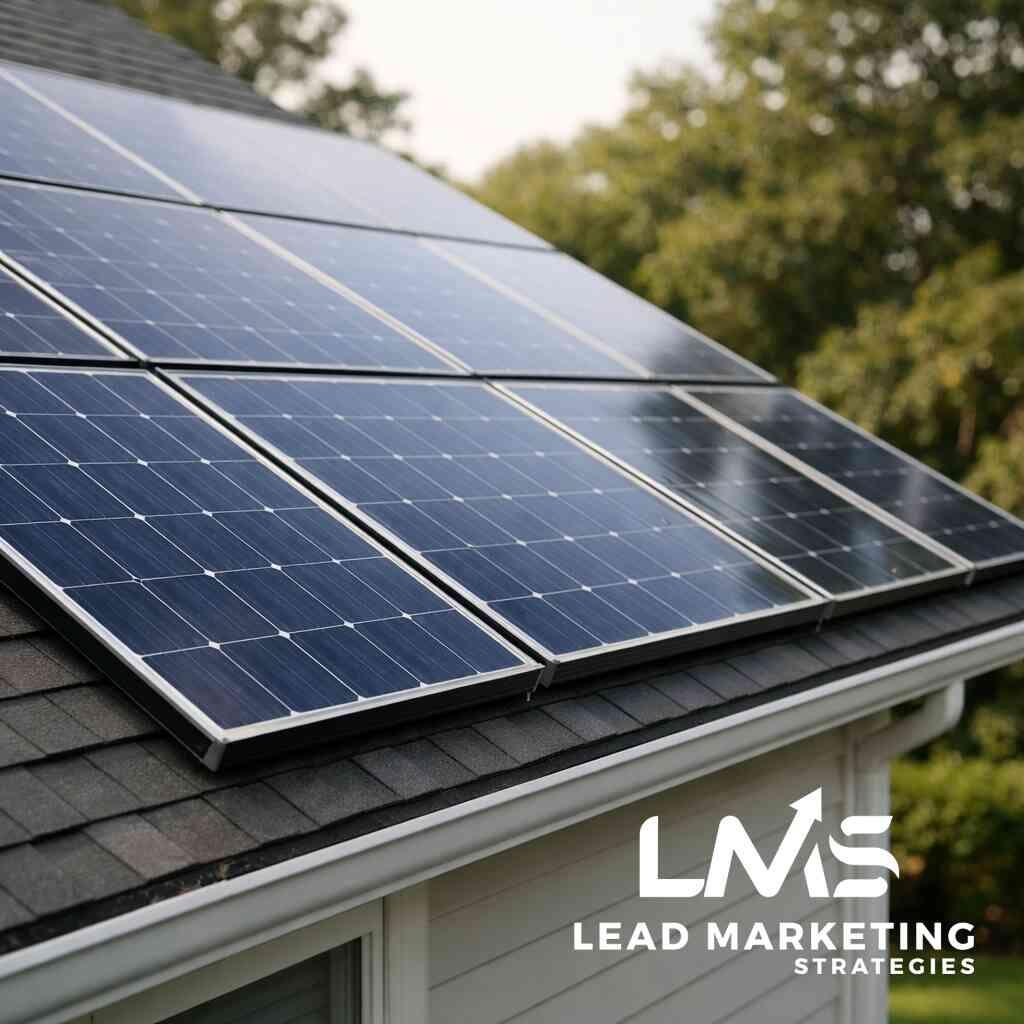
ChannelBest useTypical strengthMain weaknessGoogle AdsImmediate lead flowFast visibilityCosts rise if landing pages are weakLocal SEOSteady inbound leadsLower long-term cost per lead solarTakes time to build authorityFacebook adsAwareness and retargetingStrong for education and remarketingCold audiences need more nurturingIn my experience, the best results come when SEO holds the floor while PPC tests messaging. That way, your pipeline is not dependent on one channel. For solar contractor SEO, especially in competitive areas like Nassau County, local service pages and neighborhood proof pages can do a lot of the heavy lifting.
What makes a Long Island solar marketing system turn traffic into signed projects
A Long Island solar marketing system turns traffic into signed projects when every step is built for one job: move the right homeowner from curiosity to consultation. That means sharper pages, different offers for different channels, and a solar sales funnel that filters out low-fit leads before your team wastes time. ### How solar web design and conversion rate optimization lower cost per lead solar
Good design is not decoration. It is sales support. A clean layout, short forms, strong calls to action, and visible trust signals can cut your cost per lead solar without increasing ad spend. That is the point of solar conversion rate optimization: get more booked calls from the same traffic.
The highest-performing pages usually share a few traits:
- One clear offer, not three competing ones
- A short form that asks only for what sales truly needs
- Reviews, install photos, and financing language above the fold
- Fast mobile load times
- A booking button that stays visible as you scroll
Google’s own guidance on useful, people-first content lines up with this approach, and the FTC advertising guidance matters too. If you make savings claims, rebate claims, or warranty claims, they need to be accurate and supportable. That protects both your reputation and your close rate.
Why Google Ads for solar companies and Facebook ads for solar need different offers
Search and social do not behave the same way, so they should not use the same offer. Google Ads for solar companies should capture active demand with high-intent pages. Facebook ads for solar should educate, retarget, and create warm interest before asking for a consultation.
A simple split usually works best:
ChannelAudience moodBest offerBest landing page angleGoogle AdsReady to compareFree solar consultationProof, savings, and local installsFacebook adsBrowsing or curiousSavings guide or checklistEducation, testimonials, and remarketingRetargetingFamiliar with brandBook a site reviewDeadline, financing, or social proofI have seen campaigns fail because the same “book now” offer was pushed everywhere. That is too much too soon on social. A softer offer builds trust first. Then your retargeting and email follow-up can move people toward the appointment. This is where solar content marketing and solar email marketing start paying off.
A practical example: one installer had decent ad traffic but weak social performance. We shifted Facebook toward education, added a short lead magnet about Long Island utility savings, and used remarketing to push bookings. The ads got cheaper because the offer finally matched the audience.
The solar sales funnel that wins in Nassau County without wasting sales time
The best funnel for Nassau County solar customers does not chase every lead. It qualifies them. That saves sales time and raises close rates. You want the funnel to sort for roof-ready homes, realistic budgets, and homeowners who can move forward within a sensible timeline.
A useful funnel looks like this:
- Ad or search click
- Landing page with local proof
- Short qualification form
- Fast callback or text
- Appointment on calendar
- Proposal with financing options
- Follow-up sequence for no-shows and undecided leads
This is where solar marketing ROI becomes real. If your team spends hours on unqualified calls, your ROI drops even if lead volume looks healthy. A better funnel protects sales energy. It also improves solar lead gen strategies because the same budget produces more usable conversations.
For Long Island solar marketing strategies, I also recommend supporting pages for commercial and residential intent. A homeowner in Hicksville and a facilities manager in Huntington do not want the same message. Residential solar marketing needs savings, roof fit, and financing. Commercial solar advertising needs payback, tax treatment, and operational continuity.
Here is a simple truth from the work we do: the firms that win do not just buy leads. They build a system. If you want that system built with solar-specific expertise, our team at Solar Marketing Strategies focuses on exactly that. We work in solar and renewable energy every day, which means we build around actual solar sales cycles, not generic agency assumptions.
If you want a next move that is still practical, review your current homepage, your top ad landing page, and your follow-up emails together. If those three pieces do not tell the same story, the market will notice. Then it is time to tighten the message, improve the proof, and make the booking path easier through a focused consultation.
Frequently Asked Questions
Question: What makes Long Island solar marketing strategies work better than generic solar digital marketing campaigns?
Answer: Long Island solar marketing works best when every part of the system is built around the local buyer journey, not a generic template. Homeowners in Suffolk County and Nassau County want proof fast, so the strongest campaigns combine local solar SEO, solar web design, and solar lead generation on Long Island with a clear booking path. That means the homepage, landing pages, and follow-up emails should all speak to the same goal: get the homeowner to book a consultation.
At Solar Marketing Strategies, we focus on solar company marketing that matches real buying behavior. Some visitors are ready for Google Ads for solar companies, while others need nurturing through Facebook ads for solar, solar content marketing, or solar email marketing. The best results come from aligning the channel with the offer. Search traffic usually wants a free consultation or quote. Social traffic usually responds better to education, savings guides, or a checklist before asking for a call.
Our approach to solar marketing strategies for Long Island also emphasizes trust signals like local project photos, financing clarity, review snippets, and plain-English explanations of the installation process. That is why our solar digital marketing services are built to increase bookings, not just clicks. When the messaging, proof, and booking flow all work together, cost per lead solar drops and solar marketing ROI improves.
Question: How do solar web design and solar conversion rate optimization reduce cost per lead solar for Long Island installers?
Answer: Solar web design has a direct impact on whether traffic turns into booked appointments. If a page is slow, cluttered, or vague, Long Island homeowners will leave before they ever speak to your team. That is why solar website design services should be treated as a sales tool, not just a visual upgrade. The right layout reduces friction, makes the offer clear, and gives visitors the trust they need to move forward.
Solar conversion rate optimization helps by improving the exact points where leads drop off. We look at form length, call-to-action placement, mobile usability, loading speed, and whether the page answers the homeowner’s biggest concerns right away. For example, many Suffolk County solar leads want to know about roof condition, payback, utility savings, financing, and timeline before they book. If those answers are easy to find, the page converts better.
Solar Marketing Strategies builds pages that support solar appointment setting for solar installers by using one clear offer, visible reviews, local install examples, and a simple booking button. That improves solar marketing ROI without needing to pour more money into ads. In other words, better solar web design makes your existing solar PPC and solar lead gen strategies more efficient, which is one of the fastest ways to lower cost per lead solar.
Question: How should Google Ads for solar companies and Facebook ads for solar be used differently in Long Island solar marketing?
Answer: Google Ads for solar companies and Facebook ads for solar should never be run with the same message, because the audience intent is different. On Google, people are actively searching for help, so they are often closer to booking. That makes search a strong channel for solar lead generation, solar search engine optimization support, and high-intent landing pages focused on consultation booking strategy.
Facebook, on the other hand, is better for solar social media, education, and remarketing. Many homeowners are not ready to book immediately, but they will engage with a savings guide, local case study, or testimonial-based ad. That is where solar content marketing and solar brand development become valuable. Social ads can warm up the audience first, then retarget them with a stronger booking offer.
At Solar Marketing Strategies, we build channel-specific campaigns so your budget is used more efficiently. Search ads are tied to strong solar PPC landing pages and local solar SEO support. Social ads are tied to educational content, community-based solar advertising, and follow-up sequences that keep the brand top of mind. This kind of split strategy improves solar marketing ROI and helps Long Island solar marketing campaigns feel much more predictable.
Question: In the blog title What Makes Solar Marketing Strategies Work in Long Island, what is the most important part of the solar sales funnel?
Answer: The most important part of the solar sales funnel is the transition from interest to booked consultation. That is where many solar installer advertising campaigns lose money. A homeowner may click the ad, read the page, and even like the company, but if the next step is confusing, too long, or too slow, the lead never becomes an appointment.
A strong solar sales funnel should move the homeowner through a simple sequence: click, land on a page with local proof, complete a short form, receive a quick callback or text, and book a time. After that, the proposal, financing discussion, and follow-up sequence should continue building confidence. This process works especially well for Nassau County solar customers and Suffolk County solar leads because it respects their need for trust and clarity.
Solar Marketing Strategies helps solar companies improve this process through solar marketing services that connect solar lead generation, solar email marketing, and solar referral programs into one system. We also help firms separate residential solar marketing from commercial solar advertising so each audience gets the right message. When the funnel is built properly, your team spends less time on unqualified calls and more time closing serious prospects.
Question: Why is local solar SEO so important for Long Island solar marketing strategies, and how does Solar Marketing Strategies help with it?
Answer: Local solar SEO matters because it captures homeowners who are already looking for a nearby installer. Searches like solar installer near me, Long Island solar company, or roof solar quote show real buying intent. That means local search often brings in better-quality leads than broad awareness tactics, especially when the pages are built around town names, utility concerns, and common homeowner questions.
Solar Marketing Strategies uses solar search engine optimization to help clients earn visibility for the exact terms that matter most. That includes solar keyword research, neighborhood-level content, and pages that support solar contractor SEO. We also build out supporting content so the website becomes a stronger authority for renewable energy marketing and clean energy advertising in the local market.
For Long Island solar marketing, this local-first approach can reduce dependence on paid traffic over time. It supports solar lead gen strategies, improves solar marketing ROI, and creates a steadier stream of inbound inquiries. If you want the best solar marketing company for sustainable growth, you need a partner that understands both the technical side of SEO and the sales side of the solar business. That is exactly where our team at Solar Marketing Strategies is built to help.
Every article is written by one of our founders and independently reviewed by the other before it goes live.

Ken Key is the Chief Technology Officer and Co-Owner of Solar Marketing Strategies. He engineers the technical systems, SEO, and tools that help solar installers attract and convert homeowners. He and his wife Dominique run the company as a family business, bringing both creative and data-driven care to every campaign.

Dominique Key is Chief Marketing Officer and Co-Owner of Solar Marketing Strategies, a family-run agency helping solar installers connect with homeowners who are ready to go solar. She guides brand strategy, visual identity, and client experience with a warm, down-to-earth style. She co-runs the agency with her husband, Ken Key, blending personal attention with practical marketing know-how.


