
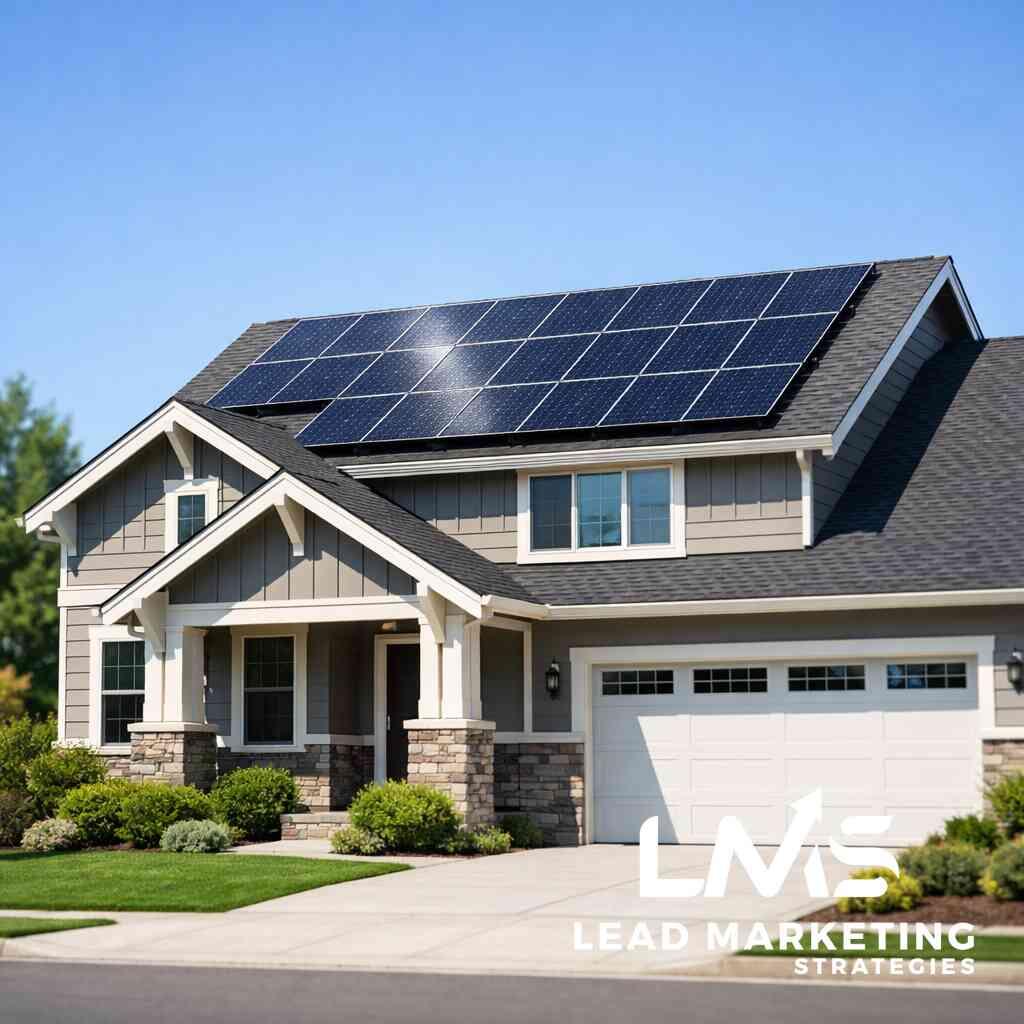
Solar marketing ROI is the profit you earn from your marketing after you subtract the full cost of the campaign. To track it accurately, you need to connect ad spend, lead quality, sales follow-up, and closed installs—not just clicks and form fills.
If your dashboard looks busy but your sales team still hears crickets, that is a real problem. We hear that from solar companies all the time, and it usually means the tracking measures activity, not revenue.
Key Takeaways
- Solar marketing ROI tells you whether your campaigns create profitable installs, not just leads.
- Cost per lead in solar can look good while your pipeline stays weak if the leads come from the wrong city, the wrong homeowner, or the wrong service area.
- The most reliable ROI formula uses customer acquisition cost, gross profit per install, and closed-won revenue.
- Accurate tracking needs solar website conversion tracking, call tracking, CRM attribution, and sales stage reporting.
- The best way to track solar marketing performance is to follow the full path from ad click to booked appointment to signed contract and install.
Why so many solar campaigns look busy but still bleed cash
The cost per lead solar teams miss when clicks come from the wrong city or the wrong intent
Cost per lead in solar can hide waste fast. A campaign may produce cheap clicks and even decent form fills, but if those leads come from outside your install area or from people who only want a quote comparison, your real cost rises sharply. Good solar lead generation starts with intent, location, and service fit, not raw volume.
Here is the part most teams miss: a homeowner searching “cheap panels near me” is not the same as someone searching “solar panel financing for my Long Island home.” The second search usually signals stronger buying intent. The first may burn budget without moving the sale forward.
On recent campaigns, we have seen solar PPC ads pull solid click-through rates and still miss the mark because the landing page allowed broad geography. One campaign in a dense suburban market looked efficient until the sales team noticed that half the leads were from areas the company did not serve. Tightening location targeting and adding local solar SEO pages cut waste fast.
A simple filter helps:
- Match the ad to the exact service area.
- Match the offer to the buyer type: residential, commercial, or utility-scale.
- Match the landing page to the search term.
- Reject leads outside your install radius or financing criteria.
That is why Google Ads for solar companies needs more than bidding skill. It needs solar keyword research, local solar SEO, and a real sales filter.
Why solar lead generation ROI can look strong on paper while the sales pipeline stays thin
Solar lead generation ROI can look strong before the close, then collapse later. That happens when marketers count leads instead of qualified appointments, proposals, or signed contracts. A clean lead dashboard can still hide poor contact rates, weak follow-up, or bad qualification rules.
A common pattern is this: a company gets 80 leads, celebrates, and then discovers only 12 answer calls, 6 book visits, and 2 ever reach proposal. That is not only a lead problem; it is a funnel problem. If your sales team is not tracking stage-by-stage conversion, your ROI math will always be fuzzy.
The fix is to track the whole solar sales funnel. We recommend comparing lead source, speed to first contact, appointment rate, proposal rate, and close rate. That gives you a real view of solar sales funnel conversion rates instead of a vanity report.
MetricWhat it tells youWhy it mattersCost per leadLead acquisition costUseful, but incompleteCost per appointmentSales qualityBetter than CPLCost per closed installTrue acquisition costBest for ROIGross profit per installProfitabilityTells you whether scaling makes senseIf you want a deeper view of performance, How To Use Solar Analytics Services explains how better attribution turns noisy campaign data into usable decisions.
The numbers that tell the truth about solar marketing ROI
How to measure solar marketing ROI with customer acquisition cost solar teams can actually trust
The best solar marketing ROI formula compares net profit from closed installs against total marketing cost. For solar teams, the most practical version is:
ROI = (gross profit from installs – marketing spend) ÷ marketing spend.
To make that trustworthy, you also need customer acquisition cost math, which includes ad spend, agency fees, software, and sales labor tied to acquisition.
A more useful lens is this:
- Customer acquisition cost = total marketing and sales cost ÷ closed customers
- Break-even CAC = average gross profit per install
- Healthy ROI = CAC stays well below profit per install and repeat/referral value supports growth
If a residential solar install yields $4,000 in gross profit and your CAC is $3,200, you are growing, but not safely. If CAC drops to $1,800 with the same close rate, you have room to scale. That same logic works for commercial solar advertising and even utility-scale solar marketing, though the sales cycles are longer and the deal values are larger.
For a broader framework, Google’s advertising guidance and the FTC’s advertising rules are worth keeping close. Solar firms also need to stay careful with claims about savings, incentives, and payback periods.
The tracking stack behind solar marketing analytics from solar website conversion tracking to solar sales funnel conversion rates
Accurate solar marketing analytics require one connected stack, not scattered reports. You need website tracking, call tracking, CRM stages, and closed-won revenue mapped to each source. Without that chain, solar SEO performance tracking and PPC reporting both become guesswork.
A strong stack usually includes:
- Solar website conversion tracking on forms, calls, chat, and booked meetings.
- Call tracking numbers by channel and landing page.
- CRM stages tied to source, campaign, and keyword.
- Offline conversion imports from signed contracts.
- Monthly reporting that compares leads, appointments, proposals, and installs.
We often build this around the HubSpot pillar-page model, adapted for solar taxonomies, because it makes reporting cleaner across solar content marketing, solar email marketing, and solar social media marketing. For content-heavy firms, Guide To Renewable Energy Marketing ROI Metrics for 2026 is a useful companion when you want to compare channels side by side.
A small anecdote says a lot. A solar contractor in a high-rate market kept saying their ads were “working.” They were getting leads, but the CRM showed that most were unqualified renters. Once we added intake questions, tightened the form, and sent traffic to a page built for homeowners, their close rate improved without raising spend. The campaign did not need more traffic. It needed better tracking and better fit.
If you are trying to track solar marketing performance across multiple channels, start with the channel that can scale fastest, then audit each step in the funnel. For many teams, that means pairing solar SEO with solar PPC and keeping conversion data in one place. If your site is weak, solar web design can change the outcome more than another ad budget increase.
For solar companies in Commack, on Long Island, or anywhere nationwide, the principle is the same. Good marketing should show you where the money comes from, where it leaks, and which channel deserves the next dollar. If you want a team that lives inside those numbers every day, Solar Marketing Strategies focuses only on solar company marketing, from local solar SEO to lead generation and conversion tracking. You can also review solar marketing cost if you want a clearer sense of spend before you scale.
If you want help reading your numbers, solar content marketing and solar lead generation should work together, not in silos. The cleanest next move is to audit your tracking, fix the leaks, and then decide where to scale.
Call +18335323100 or book a consultation to get a clearer read on your ROI.
Frequently Asked Questions
What is a good solar marketing ROI?
A good solar marketing ROI is any return that beats your full acquisition cost and leaves room for profit after sales labor, software, and install fulfillment. In practice, you want closed deals to produce more gross profit than the total cost of ads, tools, and marketing support. The exact target depends on deal size, margin, and close rate. Residential solar often needs tighter efficiency than commercial work because margins can be thinner and lead volume is higher. 
How do I calculate customer acquisition cost for solar?
Add up all marketing and sales costs tied to acquisition, then divide by the number of closed customers in the same period. Include ad spend, agency fees, CRM costs, lead tools, and a fair share of sales labor. If you spend $24,000 and close 10 customers, your CAC is $2,400. That number becomes useful only when you compare it to gross profit per install, not just total revenue.
Why does my solar lead generation look good but sales are weak?
That usually means your leads are not qualified, your follow-up is too slow, or your landing pages attract the wrong intent. A campaign can generate many leads and still fail if the traffic is outside your service area or the form allows low-fit prospects. The fix is to track appointments, proposals, and closes, not just leads. Strong solar lead gen strategies focus on fit, speed, and intent.
What tracking tools do solar companies need?
At minimum, you need website analytics, call tracking, CRM stage tracking, and offline conversion imports. Solar website conversion tracking should capture calls, forms, chat, and bookings. Then your CRM should show which source led to each sale. Without those links, solar marketing analytics will not tell you which channel truly drives installs.
How long does it take to see solar SEO results?
Solar SEO usually takes longer than paid ads because it depends on content quality, technical health, and local authority. Many companies start seeing movement in a few months, but stronger results often build over a longer stretch as pages index, rankings improve, and local trust grows. Local solar SEO and solar contractor SEO can move faster when your site is well structured and your service-area pages are specific.
Is solar PPC worth it?
Solar PPC is worth it when you can control geography, intent, and conversion quality. It can bring leads faster than SEO, but it can also waste money fast if the targeting is broad or the landing page is weak. The best use of PPC is often to support a stronger solar sales funnel while SEO and content build long-term demand.
The Solar Marketing Strategies Team
Our team of marketing experts specializes in helping solar businesses grow their businesses through strategic digital marketing, SEO, and customer acquisition.
View all articles

