Solar PPC can bring leads fast, but it can also drain budget just as quickly. Solar SEO usually takes longer to show results, yet it often lowers cost per lead and builds steadier solar lead generation over time.
If you are reading this because your ads looked great on Monday and disappointing by Friday, I get it. That swing is real. It is one of the hardest parts of solar company marketing, especially when every click feels expensive and every missed call feels personal.
Key Takeaways
- Solar PPC gives fast visibility, but you pay for every click, so weak targeting or poor follow-up can make cost per lead solar numbers climb fast.
- Solar SEO usually takes longer, but organic rankings for solar businesses can compound and lower the long-term cost of acquisition.
- High-intent solar keywords often attract homeowners who are still comparing, not ready to buy, so lead qualification matters as much as click volume.
- The strongest solar marketing ROI usually comes from combining local solar SEO, landing page optimization, and disciplined Google Ads for solar companies.
- If your website does not convert, both paid search for solar installers and organic traffic will underperform.
Why Solar PPC can look like a winner on Monday and a money pit by Friday
Solar PPC can look like a winner because it delivers immediate search visibility, fast testing, and quick lead volume. The catch is that you are renting attention. If your targeting, landing page, or follow-up is weak, your cost per lead can rise fast even when clicks seem affordable at first.
The cost per click trap that makes solar ads feel cheaper than they really are
The cost per click trap happens when you judge solar PPC by click price alone instead of by booked appointments and installs. A $12 click can be cheaper than a $40 click, but if the cheaper traffic never converts, it costs more in the end. That is why we always compare cost per lead solar against appointment rate and close rate, not just CPC.
Here is the part most homeowners never see, and most solar owners feel in their bank account: the auction is only one line item. On real campaigns, the true cost includes landing page optimization for solar ads, call tracking, sales follow-up, and the clicks lost to broad match queries that never had buying intent.
MetricGood signWarning signClick-through rateRising after message testsHigh clicks, low callsCost per leadStable and predictableDrops one week, spikes the nextConversion rate8% to 20% on well-built pagesUnder 5% on generic pagesLead qualityHomeowners with utility bills and roof ownershipRenters, out-of-area, low-intent browsersThe mistake I see most often is this: a solar company bids on broad terms, sends traffic to a homepage, and then blames the market. That is not a market problem. It is a funnel problem. If you want better solar PPC benchmarks, start with tighter solar keyword research, cleaner ad groups, and one clear offer.
Why high intent solar keywords attract leads that still never pick up the phone
High-intent solar keywords do bring stronger traffic, but intent is not the same as readiness. Someone searching “solar installer near me” may still be comparing three quotes, checking financing, or trying to understand rebates. That is why solar lead qualification matters just as much as the keyword list.
A homeowner in Nassau County once clicked an ad for a “free solar estimate” after reading three competitors’ pages in one evening. The ad worked. The page worked. The lead still did not answer because the follow-up started the next day instead of within minutes. When we tightened the response time and used an AI lead agent for the first touch, the same traffic turned into more booked consultations.
This is also where regulatory trust matters. The FTC’s advertising guidance is clear about truthful claims, and solar ads should avoid inflated savings promises or vague rebate language. If your ads overpromise, you may win the click and lose the homeowner.
For solar installer advertising, I usually tell clients to split paid search into three buckets:
- Brand terms for people already looking for your company.
- Bottom-of-funnel solar marketing terms for homeowners comparing installers.
- Competitor and local intent terms for discovery and market share.
That structure helps solar search engine marketing stay readable. It also makes it easier to see which campaigns create calls, not just traffic.
When solar SEO starts compounding while PPC is still paying rent
Solar SEO starts compounding when your site earns stable visibility for local and service-based searches. PPC stops the moment you stop paying. SEO keeps working after the content, pages, and technical fixes are in place, which is why it often lowers long-term lead costs for solar companies with patience and discipline. 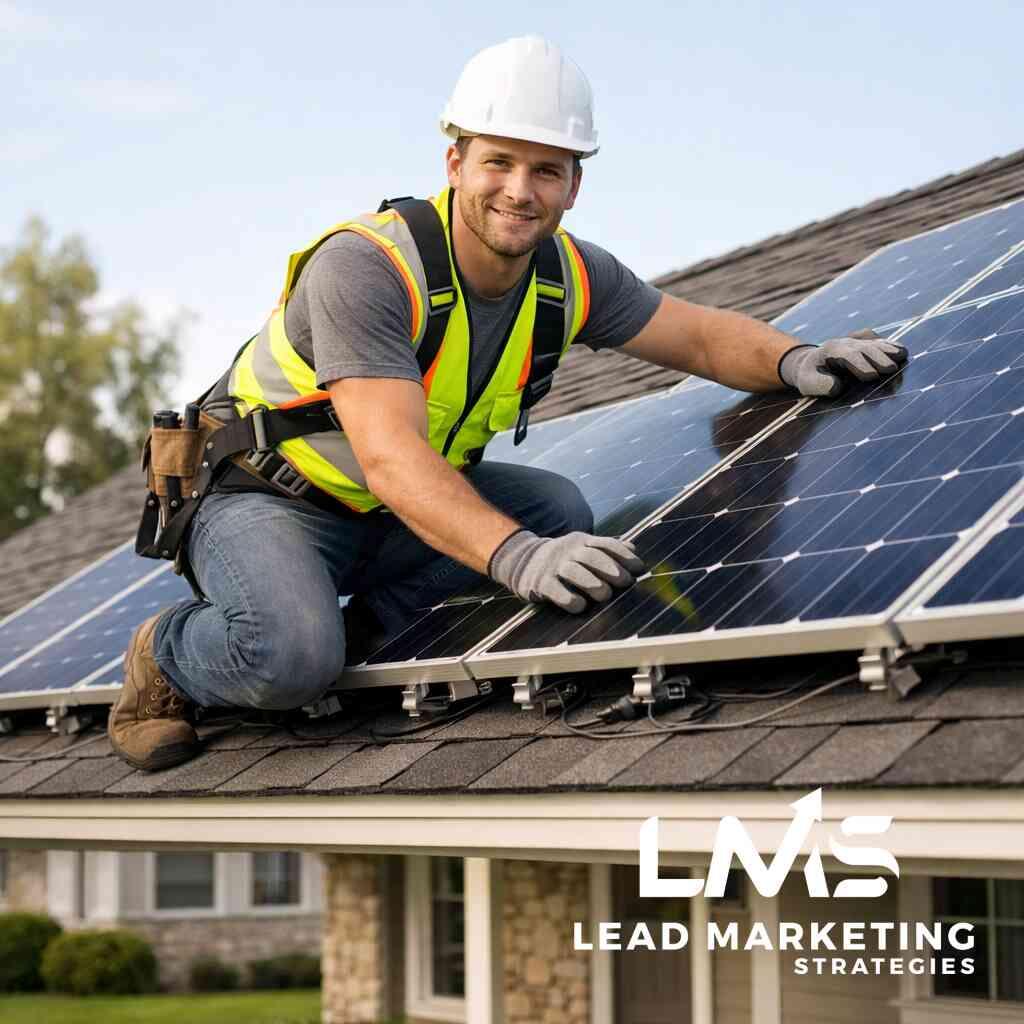
How organic search growth for solar companies builds momentum around local solar SEO
Local solar SEO builds momentum by improving your visibility for map results, service pages, and location-specific searches. That matters because a homeowner in Commack may search differently than someone in Phoenix or Austin. Search intent changes by market, but the same basics still win: page relevance, proximity signals, reviews, and clean technical structure.
Google’s own Search Essentials favor helpful content made for people first. In practice, that means your pages should answer the real questions homeowners ask: equipment, financing, warranties, roof conditions, and payback timing. Thin pages do not build organic search growth for solar companies. Clear, useful pages do.
We see the biggest SEO gains when the site has a strong structure for residential solar marketing, commercial solar advertising, and solar contractor SEO. A good page does more than rank. It qualifies. It tells the right homeowner, “You are in the right place,” before the call ever happens.
A simple way to think about it:
- PPC buys speed.
- SEO buys durability.
- Local SEO buys trust in your market.
Even if your team is based in Commack, Long Island, your best leads may come from markets with different utility rates, incentives, and roof types. We have seen the same framework work in Long Island suburbs, Pennsylvania towns, and warmer markets where homeowners are comparing utility savings and state policy more closely.
For context, SEIA’s installation data keeps showing that solar demand remains strong across many U.S. markets, but demand alone does not guarantee leads for your company. Your pages still have to rank, load quickly, and match the searcher’s intent. That is where solar search visibility becomes a real asset instead of a vague metric.
Why solar website design services and solar content marketing decide who owns the click after the ad is gone
Your website decides whether you keep the click or lose it. If the page looks dated, loads slowly, or asks for too much too soon, the homeowner bounces. Strong solar website design services and solar content marketing turn both PPC and SEO traffic into qualified solar lead generation.
A few years ago, we worked with a company that had decent traffic and almost no booked appointments. Their issue was not demand. It was the page. The form sat too low, the offer was too vague, and the content never addressed financing or local utility concerns. Once we rebuilt the page, tightened the message, and added clearer proof, the same traffic produced better results without increasing ad spend.
Here is a simple comparison:
AreaSolar PPCSolar SEOSpeedFastSlow to startCost modelPay per clickPay with time and contentVisibilityImmediate while fundedBuilds over timeBest useTesting offers and scaling quicklyLowering long-term lead costsRiskBudget loss from poor targetingSlower ramp if content is weakThat table is the real difference between solar PPC vs solar SEO results. PPC gives you instant reach. SEO gives you compounding visibility. But neither one works well on a weak website.
This is why I often push clients to combine solar web design with content built around solar lead gen strategies, FAQs, service pages, and case studies. If the page answers the question fast, the click has a chance to become a call. If it does not, the traffic leaks out, no matter where it came from.
For solar companies trying to improve their solar sales funnel, the best path is usually not either/or. It is disciplined paid testing, local ranking work, and pages that convert. That is also where Solar Marketing Strategies fits naturally: we build solar marketing services around the sales cycle, not around vanity metrics. If you need help turning clicks into booked appointments, our team can map the channels, tighten the pages, and track what actually closes.
What you should do next
If your solar PPC is costing too much or your SEO is not yet producing enough qualified demand, I would not guess. I would audit the funnel, compare lead quality by source, and fix the weakest link first. That is often where the fastest return lives.
If you want help with that, book a consult with Solar Marketing Strategies or call +1 833-532-3100. You can also download the Solar Marketing Strategies app to organize your project, review progress, and keep the work moving without the usual back-and-forth.
Frequently Asked Questions
Question: What is the difference between solar PPC vs solar SEO results, and how should Solar Marketing Strategies decide which channel to prioritize for better solar marketing ROI?
Answer: Solar PPC and solar SEO solve different problems, and the best choice depends on your goals, budget, and timeline. Solar PPC is ideal when you need immediate visibility, fast testing, and quicker solar lead generation through Google Ads for solar companies. It can produce leads quickly, but it also requires disciplined ad targeting, landing page optimization for solar ads, and strong follow-up to keep cost per lead solar numbers under control. Solar SEO, on the other hand, is a longer-term investment in solar search engine optimization and local solar SEO that can compound over time and reduce your reliance on paid clicks.
For many solar companies, the strongest solar marketing services strategy is a blend of both. PPC can capture demand now, while SEO builds organic rankings for solar businesses and supports organic search growth for solar companies over time. Solar Marketing Strategies helps clients compare lead cost comparison in solar marketing by tracking calls, booked consultations, and closed deals, not just clicks. That is how we identify whether your current mix of solar installer advertising, solar lead gen strategies, and conversion rate optimization for solar is actually producing meaningful solar marketing ROI.
Question: How does landing page optimization and solar website design services affect cost per lead solar for both paid search for solar installers and organic traffic?
Answer: Your website is often the deciding factor in whether a click becomes a lead. Even strong solar PPC campaigns can underperform if the landing page is slow, generic, or unclear. The same is true for SEO traffic. If your solar website design services are not built for conversion, then your solar search visibility may improve without producing enough booked appointments. That is why landing page optimization for solar ads and solar content marketing are so important.
A good solar sales funnel should guide the homeowner from curiosity to trust to action. That means clear messaging, fast page load speeds, proof elements, and offers that match the search intent behind high-intent solar keywords. For example, someone searching for local solar lead generation or residential solar marketing is often comparing installers, financing, and incentives. If your page does not answer those questions quickly, they leave.
Solar Marketing Strategies builds solar web design and solar content marketing around the questions homeowners actually ask. We structure pages for solar contractor SEO, commercial solar advertising, and bottom-of-funnel solar marketing so the site does more than look good. It converts. That is how we help lower cost per lead solar while improving solar lead qualification.
Question: Why do high-intent solar keywords and solar keyword research matter so much in solar digital marketing and solar installer advertising?
Answer: High-intent solar keywords matter because they help you appear in front of homeowners who are actively evaluating solar options. But keyword intent is only part of the equation. Strong solar keyword research helps you separate curious browsers from people who are closer to requesting a quote. That distinction matters in both solar PPC and solar SEO because not every search is equally valuable.
For solar digital marketing, good keyword strategy includes brand terms, service terms, location terms, and comparison terms. It also means understanding how people search in different markets, whether you are focused on Long Island solar marketing, Commack NY marketing agency support, or nationwide solar marketing. A homeowner searching solar installer advertising terms may be ready to compare companies, while someone searching solar marketing tips may still be early in the buyer journey.
Solar Marketing Strategies uses solar keyword research to shape both paid search for solar installers and organic rankings for solar businesses. We look at search volume, competition, local relevance, and conversion potential so your campaigns support real solar lead generation, not just traffic. This approach improves solar SERP performance and helps your team get more value from every click or ranking gained.
Question: How can Solar Marketing Strategies improve solar sales funnel performance and solar lead qualification for companies using Google Ads for solar companies or organic lead generation for solar?
Answer: Improving solar sales funnel performance starts with understanding where leads are dropping off. A lot of solar companies spend heavily on Google Ads for solar companies or organic lead generation for solar, then lose momentum because the follow-up is too slow, the message is too broad, or the offer does not match the search intent. That is why solar lead qualification is just as important as generating the lead in the first place.
Solar Marketing Strategies helps clients refine every stage of the funnel, from ad click to consultation booking. We evaluate solar ad targeting, call tracking, response time, and the quality of the forms and pages tied to your campaigns. If a lead comes from bottom-of-funnel solar marketing, it should be routed and followed up differently than someone who came from a general educational page.
We also help companies build solar lead gen strategies that support both residential solar marketing and commercial solar advertising. That may include better messaging, stronger proof, improved page flow, and tighter integration between your website and your sales process. The result is a stronger funnel, better lead quality, and better solar marketing ROI.
Question: How does The Difference Between Solar PPC and Solar SEO Results relate to solar marketing trends 2025, and what should solar companies focus on next?
Answer: The core lesson in The Difference Between Solar PPC and Solar SEO Results is that the best solar marketing strategies are built on balance, measurement, and patience. In solar marketing trends 2025, companies that rely on one channel alone will likely feel more pressure from rising competition, changing search behavior, and increasing expectations around speed, trust, and clarity. That makes a diversified solar digital marketing plan more important than ever.
Solar companies should focus on a few key areas next: local solar SEO, conversion rate optimization for solar, stronger solar content marketing, and disciplined solar PPC benchmarks. Paid campaigns can still deliver fast demand generation, but only if the landing pages, offers, and lead follow-up are strong. Organic rankings for solar businesses can still compound, but only if the site is useful, technically sound, and aligned with what homeowners actually want to know.
Solar Marketing Strategies supports this by combining solar brand development, solar search engine optimization, Google Ads for solar companies, and data-driven reporting. We help companies turn solar search visibility into actual appointments and installs. Whether you need help with solar email marketing, solar referral programs, or a full solar marketing agency strategy, the goal stays the same: make your marketing produce qualified demand that lasts.
Every article is written by one of our founders and independently reviewed by the other before it goes live.

Ken Key is the Chief Technology Officer and Co-Owner of Solar Marketing Strategies. He engineers the technical systems, SEO, and tools that help solar installers attract and convert homeowners. He and his wife Dominique run the company as a family business, bringing both creative and data-driven care to every campaign.

Dominique Key is Chief Marketing Officer and Co-Owner of Solar Marketing Strategies, a family-run agency helping solar installers connect with homeowners who are ready to go solar. She guides brand strategy, visual identity, and client experience with a warm, down-to-earth style. She co-runs the agency with her husband, Ken Key, blending personal attention with practical marketing know-how.