Solar keyword research is the process of finding the exact search terms homeowners and businesses use when they are close to requesting a quote, booking a site visit, or comparing installers. Done well, it helps you get more qualified solar leads, not just more clicks.
Key Takeaways
- Solar keyword research connects search intent to revenue. It helps you target people who are actively comparing solar quotes, financing, and installers.
- Bad keywords waste ad spend fast. Broad terms can bring traffic that never calls, while high-intent terms usually drive better solar lead growth.
- Residential and commercial keywords are not the same. Homeowner searches, business owner searches, and utility-scale searches each need a different solar SEO keyword strategy.
- Local intent matters. Searches tied to cities, counties, and service areas often convert better because they match how solar buyers actually shop.
- Strong keyword research supports both solar SEO and solar PPC. The same insight can shape landing pages, Google Ads for solar companies, and solar sales funnel keywords.
Why your solar ads get clicks but not signed projects
Solar keyword research is how you separate curiosity from buying intent. If your ads bring in clicks but not signed projects, the problem is usually the keyword mix, the landing page, or both. The searcher may be interested, but not ready, and that gap can drain your solar marketing budget quickly.
The hidden gap between interest and intent in solar keyword research
The gap shows up when people search broad phrases like “solar panels” or “solar company marketing” instead of terms that signal action, such as “solar quote near me” or “best solar installer in Long Island.” I see this often in solar digital marketing campaigns. The click looks good on paper, but the lead never answers the phone.
That is why I always push clients to build a solar SEO keyword strategy around intent, not volume alone. Google’s own FTC advertising guidance also matters here, because solar ads must stay clear, truthful, and specific. If your message overpromises savings or underexplains financing, lead quality drops even faster.
One installer I worked with in the Long Island market was paying for broad terms that pulled in renters, DIY researchers, and people still comparing roof repair options. We tightened the keyword set, rebuilt the ad groups, and matched each group to a cleaner landing page. Calls dropped in volume at first, then the quote rate improved because the traffic finally matched the offer.
How bad keyword choices drain solar lead growth before the first call comes in
Bad keyword choices waste money before sales ever gets involved. They create expensive impressions, low click-through rates, and leads that do not fit your service area or project size. That hurts solar lead generation, solar marketing ROI, and your team’s time. Here is the part most homeowners miss: the wrong keyword can also distort your whole funnel. If your ads attract research-stage visitors, your sales team gets more follow-up work but fewer signed projects. If your landing page talks about panels, but the searcher wants financing, conversion falls again.
Common keyword mistakes include:
- Targeting only high-volume terms with no buyer intent
- Mixing residential solar marketing keywords with commercial solar advertising keywords
- Sending all traffic to one generic homepage
- Ignoring local solar SEO signals like city names, utility regions, and state incentives
- Using the same ad copy for both search and retargeting campaigns
A simple comparison makes the point clear:
Keyword typeSearch intentTypical resultBroad solar termsEarly researchMore clicks, weaker lead qualityHigh-intent solar keywordsQuote-ready interestFewer clicks, stronger conversion rateLocal solar SEO termsService-area intentBetter phone calls and form fillsCommercial solar advertising keywordsBusiness buying cycleLonger sales process, higher deal valueIf you want to lower cost per lead solar numbers, keyword research has to shape the entire route from search to form fill. That includes solar landing page optimization, solar web design, and the offer itself. A strong keyword set cannot save a weak page.
What the best solar keyword research uncovers before your competitors see it
The best solar keyword research reveals who is ready to buy, what they care about, and which market segment they fit. It also shows which searches belong in solar SEO, which belong in Google Ads for solar companies, and which terms should never be grouped together. That is how you get cleaner data and better lead growth. 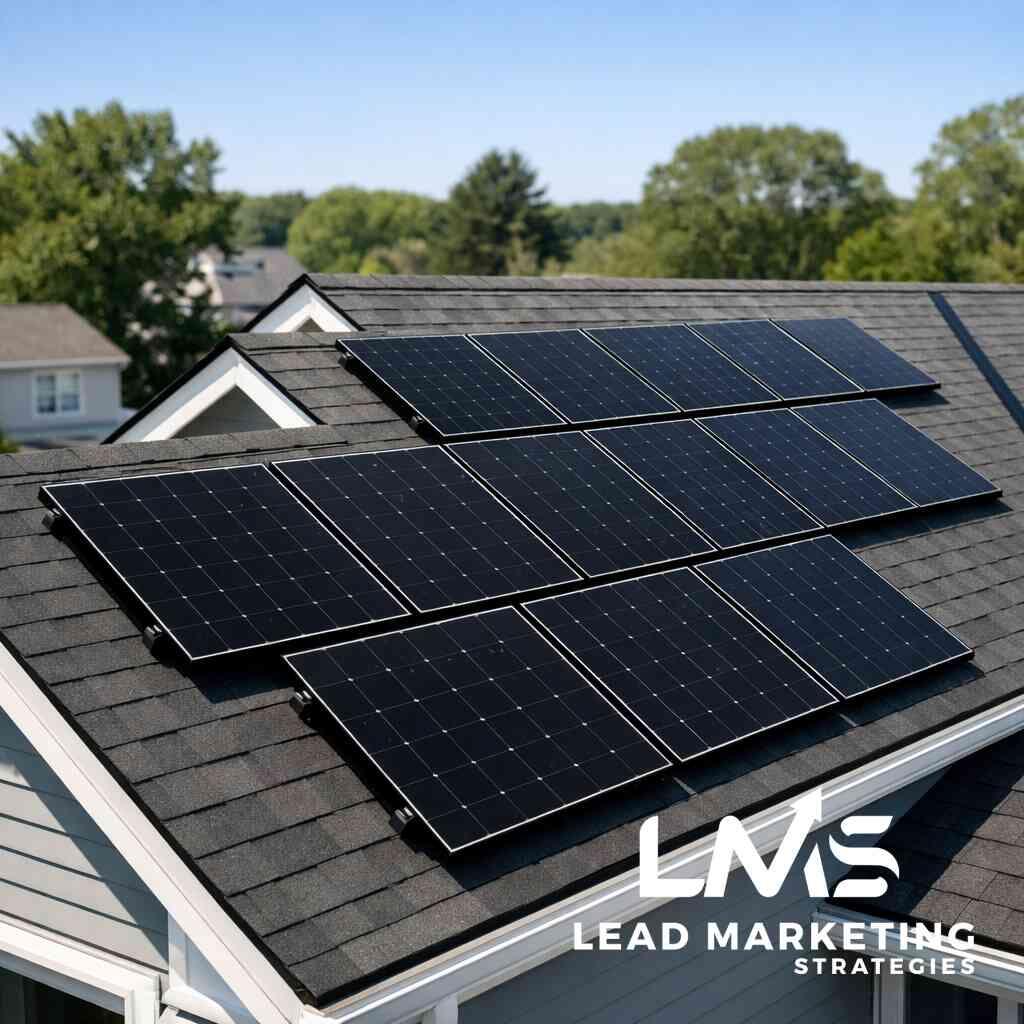
High-intent solar keywords that signal a homeowner is ready to buy
High-intent solar keywords usually include a location, a service phrase, or a comparison cue. They show clear commercial interest. In my experience, these are the terms that usually convert best when paired with focused solar landing page optimization.
Examples include:
- “solar panel installation near me”
- “residential solar quote”
- “local solar company”
- “best solar installer in [city]”
- “solar financing for homeowners”
- “home solar battery installation”
These terms work because they line up with real buying moments. The homeowner is not just reading about renewable energy marketing. They are trying to solve a problem, compare providers, or understand cost. That is the opening solar marketing should use.
We also track solar search engine optimization opportunities around utility and policy language. In some markets, people search for net metering, state rebates, or electric bill reduction. In others, especially areas with strong rate pressure like Long Island, the search leans harder toward savings and payback. That is why solar marketing tips have to reflect the market, not just the keyword tool.
The difference between residential solar marketing keywords and commercial solar advertising keywords
Residential and commercial searches look similar at first glance, but they behave differently. A homeowner wants savings, trust, and a simple process. A business owner wants ROI, downtime control, tax treatment, and project scale. Utility-scale buyers care about land use, interconnection, and development timelines.
SegmentMain concernBest keyword angleSales cycleResidential solar marketingMonthly savings and home value”home solar,” “solar quote,” “residential installer”Short to mediumCommercial solar advertisingOperating cost and ROI”commercial solar installer,” “business solar panels”Medium to longUtility-scale solar marketingProject scale and feasibility”utility-scale solar development”LongThat difference matters in solar PPC keywords and in content planning. A commercial lead should not land on a page written for a homeowner with a ranch house in Commack. And a homeowner should not be forced through language about procurement, capex, or engineering packages.
For that reason, I usually map keywords into separate tracks for solar company marketing, solar installer advertising, and solar brand development. We use the HubSpot pillar-page model adapted for solar taxonomies, and it helps keep every page tight. If you need help connecting that research to execution, our team also builds campaigns from solar lead generation through content, search, and conversion.
If you are serious about growth, start with the right market slice. Then match the keyword, the page, and the offer. That is where the lift happens.
Frequently Asked Questions
Question: What is solar keyword research, and how does it improve solar lead growth for my solar company marketing?
Answer: Solar keyword research is the process of identifying the exact search terms people use when they are ready to request a quote, compare installers, or move forward with a solar project. For solar company marketing, this is one of the fastest ways to improve solar lead growth because it helps you focus on high-intent solar keywords instead of wasting budget on broad searches that only bring curiosity clicks. When Solar Marketing Strategies builds a solar SEO keyword strategy, we look at buyer intent, service area, and funnel stage so your campaigns attract homeowners and businesses who are actually likely to convert. That means better solar digital marketing performance, stronger solar marketing ROI, and a lower cost per lead solar result over time. Whether the goal is residential solar marketing, commercial solar advertising, or local solar SEO, keyword research gives your ads, pages, and content a much better chance of turning traffic into real opportunities.
Question: How does What Is Solar Keyword Research for Lead Growth help me choose between solar SEO and solar PPC keywords?
Answer: The blog What Is Solar Keyword Research for Lead Growth explains a simple truth: not every keyword belongs in the same campaign. Some terms are best for solar search engine optimization, while others work better in Google Ads for solar companies and solar PPC keywords campaigns. For example, broad educational terms may support solar content marketing, while high-intent solar keywords like solar panel installation near me or residential solar quote are often better for PPC because they capture people who are closer to taking action. At Solar Marketing Strategies, we help you sort those terms so your solar marketing services are built around real intent, not guesswork. That separation improves solar PPC benchmarks, strengthens your solar sales funnel keywords, and helps your landing pages match the searcher’s needs more closely. The result is cleaner data, better lead quality, and a more efficient solar lead gen strategies plan across both SEO and paid search.
Question: Why do residential solar marketing keywords and commercial solar advertising keywords need separate strategies?
Answer: Residential and commercial buyers search differently, think differently, and convert differently. Residential solar marketing keywords usually focus on savings, home value, financing, and simple installation terms, while commercial solar advertising keywords tend to center on ROI, tax incentives, project size, and operational efficiency. If you mix them together, your message becomes too generic, and your solar landing page optimization suffers. Solar Marketing Strategies builds solar company marketing campaigns with separate keyword groups so a homeowner in Long Island sees messaging that fits a home project, while a business owner sees content aligned with commercial goals. That kind of precision is essential for solar contractor SEO, solar panel marketing, and solar website design services because it improves relevance at every step. It also helps your solar brand development feel more professional and trustworthy, since each audience gets a page and message designed specifically for them.
Question: How can Solar Marketing Strategies use local solar SEO and Long Island solar marketing to bring in more qualified leads?
Answer: Local solar SEO is one of the most powerful ways to generate qualified leads because solar buyers usually search within a city, county, or service area before contacting an installer. That is why Long Island solar marketing, Commack NY marketing agency support, and other geo-targeted strategies can perform so well. Solar Marketing Strategies uses solar keyword research to identify location-based search terms, then builds content, service pages, and Google Ads for solar companies around those terms. This makes it easier to reach people who are already looking for a local provider instead of a nationwide brand they may never call. By aligning local solar SEO with solar sales funnel keywords and solar landing page optimization, we help reduce wasted spend and improve conversion rates. It is a practical approach for solar installer advertising because it focuses on the search behavior of your actual service area, not just vanity traffic.
Question: What makes Solar Marketing Strategies a strong solar marketing agency for solar digital marketing and lead generation?
Answer: Solar Marketing Strategies is built around the full solar digital marketing system, not just one tactic. That means we connect solar keyword research, solar SEO, solar PPC, solar content marketing, solar social media, and solar website design services into one strategy designed to grow your business. As a solar marketing agency, we understand that a website is not just an online brochure; it is your 24/7 sales tool, and it has to be built to generate leads efficiently. We also pay close attention to solar marketing tips that improve conversion, such as matching search intent to page copy, using clear calls to action, and building pages that support solar marketing ROI. If you need help with solar lead generation, renewable energy marketing, clean energy advertising, solar video marketing, Facebook ads for solar, or even solar referral programs, we can build a plan that fits your goals. The advantage of working with the best solar marketing company is that every channel supports the same outcome: more qualified leads, more booked appointments, and more signed projects.
Every article is written by one of our founders and independently reviewed by the other before it goes live.

Ken Key is the Chief Technology Officer and Co-Owner of Solar Marketing Strategies. He engineers the technical systems, SEO, and tools that help solar installers attract and convert homeowners. He and his wife Dominique run the company as a family business, bringing both creative and data-driven care to every campaign.

Dominique Key is Chief Marketing Officer and Co-Owner of Solar Marketing Strategies, a family-run agency helping solar installers connect with homeowners who are ready to go solar. She guides brand strategy, visual identity, and client experience with a warm, down-to-earth style. She co-runs the agency with her husband, Ken Key, blending personal attention with practical marketing know-how.