
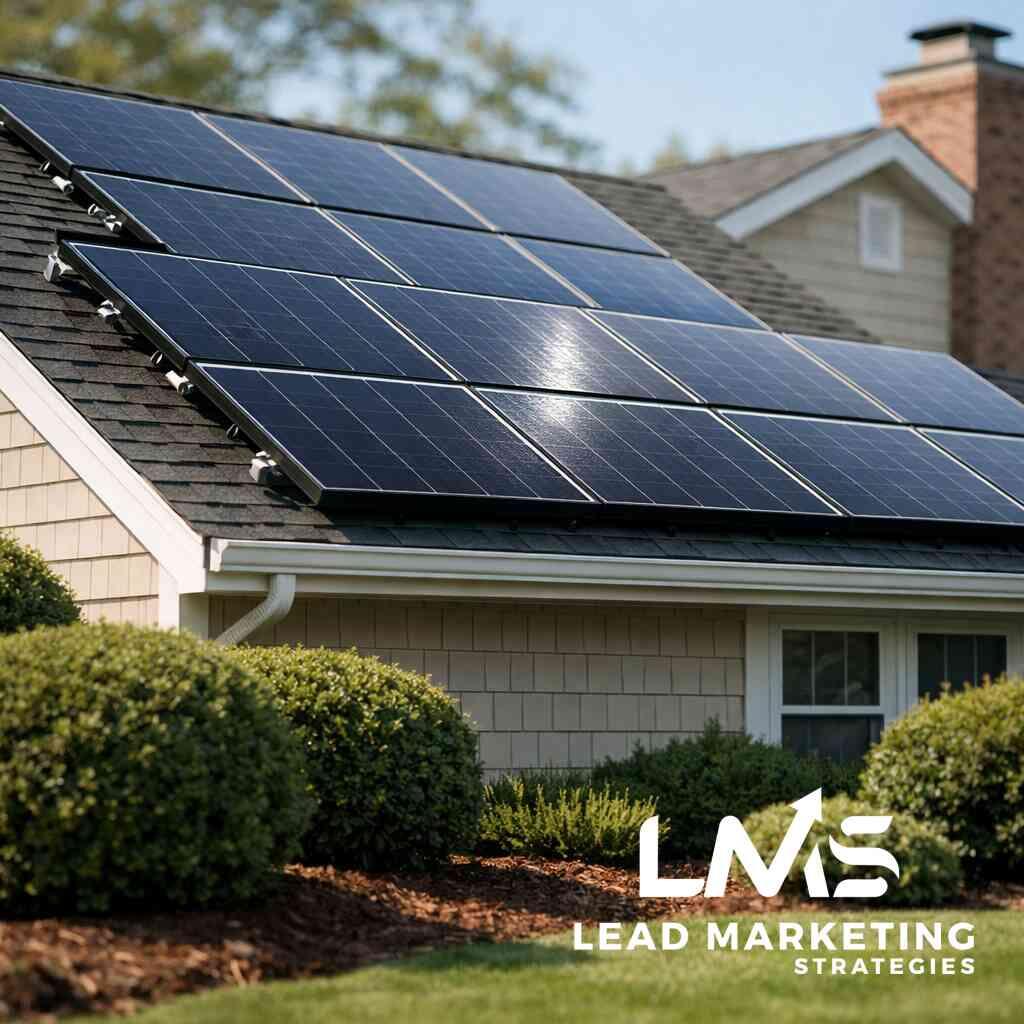
If your solar company is busy but still not showing up on Google Maps, your local SEO may be leaking nearby leads before your sales team ever gets a chance. The fix is usually not more traffic; it is better local signals, stronger location pages, and a more optimized Google Business Profile.
Key Takeaways
- Local solar SEO helps nearby leads find your company in the map pack for “near me” and neighborhood searches.
- Service area pages outperform generic city pages when they match real install zones, proof points, and local intent.
- Google Business Profile optimization for solar matters because it drives map pack rankings, calls, and quote requests.
- NAP consistency, citations, and schema markup help Google trust that your business is real, local, and active.
- Local visibility only converts when your site is mobile-first, fast, and built for quote requests, not just page views.
Why your solar firm is invisible on Google Maps even when your crews are busy
Google usually hides solar contractors in the map pack for three reasons: weak location signals, thin local content, or poor trust data. Busy crews do not matter if your Google Business Profile, service area pages, and citations do not clearly show where you work and who you serve. I see this all the time with residential solar marketing and solar contractor SEO.
The local solar searches that are stealing nearby leads before your sales team ever sees them
Nearby leads often come from short, high-intent searches like “solar installer near me,” “roof solar quote,” or “best solar company in [town].” Those searches are local intent solar searches, and they usually convert faster than broad research traffic. The problem is that many solar firms chase vanity rankings instead of the exact phrases homeowners use when they are ready to compare quotes.
One contractor I worked with in Suffolk County had solid crews, good reviews, and a decent ad budget, but they were invisible for neighborhood solar targeting. Their site talked about “clean energy solutions” in general terms, not the streets and suburbs they actually served. Once we rebuilt their local solar SEO around nearby solar leads and neighborhood intent, calls started coming from homeowners who were already comparing roof size, utility bills, and roof age.
Why service area pages and Google Business Profile signals matter more than generic city keywords
Generic city keywords are too broad for most installers. A better approach is to build solar service area pages and location-based solar landing pages that match how people search in real markets. For example, a homeowner in Commack will not always search “Long Island solar.” They may search by town, school district, or a nearby landmark.
Your Google Business Profile optimization for solar should reinforce those same signals. Add service categories, service areas, install photos, FAQ content, and posts that reflect actual projects. Google also uses engagement signals, so if people click, call, request directions, or read reviews, that helps local map pack rankings for solar over time. For the technical side, How Solar Marketing Strategies Improve Local SEO in Commack shows how we structure those signals for Commack and nearby markets.
How Long Island, Commack, and other tight service markets expose weak local SEO fast
Tight service markets expose mistakes faster because search demand is compact and competitive. On Long Island, one weak page can mean you lose to a smaller installer with better local SEO for solar companies and stronger online reviews for solar installers. The same pattern shows up in places with dense suburbs, heavy utility bills, and active permit offices.
Here is the part most homeowners never see: if your site does not make your service footprint obvious, Google will assume you are less relevant than a smaller company that simply explains its work better. I have seen that happen in Commack, on the North Shore, and in other nearby zones where homeowners want a trusted local solar contractor, not a generic national brand. If your company serves multiple metros, What Is Local Solar SEO for Multi Location Installers is the better framework than one oversized city page.
The trust signals Google wants before it ranks a solar contractor in the map pack
Google wants proof that your business is real, local, and relevant before it promotes you in map results. That proof comes from geo-targeted solar keywords, consistent business data, local citations, schema markup, and content that sounds like a contractor who actually works in the area. Without those signals, your solar search engine optimization will stall.
How to build a solar keyword map around geo-targeted solar keywords and near me intent
A strong keyword map starts with intent, not volume. I usually organize solar keyword research into three buckets: 
- Immediate buyer intent: “solar quote near me,” “solar installer near me,” “solar consultation leads.”
- Local comparison intent: “best solar company in [town],” “residential solar marketing,” “solar PPC benchmarks.”
- Trust-building intent: “solar tax credit,” “roof suitability,” “battery backup cost,” “how to market a solar business.” That structure helps you build content that matches the solar sales funnel instead of stuffing pages with repeats. It also keeps your solar blog optimization focused on real questions homeowners ask before they request estimates. For campaign planning, our team often pairs local SEO with Google Ads for Solar Companies so the search terms we rank for are the same terms we buy when we need faster lead flow. If you are still defining the search side, our guide on What Is Solar Keyword Research for Lead Growth is a helpful starting point.
A simple comparison helps:
Search type | Example query | Best page type | Main goal Near me intent | solar installer near me | location page | Calls and quote requests Service intent | solar panel installation | service page | Education and trust Comparison intent | best solar company in Commack | local landing page | Proof and differentiation Research intent | how much does solar cost | blog post | Capture early-stage leads
Why NAP consistency, local citations, and schema markup decide whether Google trusts your business
NAP consistency for solar businesses means your name, address, and phone number must match everywhere. If your website, Google Business Profile, Apple Maps, directories, and social profiles disagree, Google hesitates. That hesitation can push you out of the local pack even when your reviews are strong.
Local citation building for solar still matters because it reinforces your company’s identity across trusted sources. I also recommend schema markup for solar websites, especially LocalBusiness, Service, and FAQ schema, because it helps search engines read your services faster. Google’s own FTC advertising guidance is also worth reading if your ads or landing pages mention rebates, savings, or performance claims. That matters in solar, where clean energy advertising must stay accurate and clear.
A client once came to us after spending months on solar PPC and getting weak lead quality. Their website had three different phone numbers, two different service addresses, and no structured data. Once we fixed the NAP issues, cleaned up citations, and added schema, their local map visibility improved and their cost per lead solar numbers started to make more sense.
If you want the local trust side handled with more depth, our Local SEO Services for Solar Companies work is built for exactly this kind of problem. We also pair it with Web Design Services for Solar Companies and Lead Generation for Solar Companies so the traffic does not just arrive — it turns into real solar quote requests.
How to make local SEO turn into booked appointments instead of empty traffic
Local SEO only pays off when your website, intake process, and follow-up system move people from search to booked consultation. That means mobile-first solar web design, fast contact forms, clear offers, and trust signals that reduce friction. If nearby traffic does not convert, the ranking is just decoration.
What mobile-first solar web design and conversion rate optimization do for quote requests
Most solar searches happen on a phone. If your pages load slowly, your forms are hard to tap, or your phone number is buried, you lose the lead. Mobile-first solar web design should place the call button, form, proof points, and financing message above the fold. That is especially true for residential solar marketing, where the homeowner is often comparing two or three options in one sitting.
Our own solar lead generation work usually improves when we tighten the page around one action: request a quote, book a consult, or call now. We remove extra clicks. We shorten forms. We put local proof higher on the page. How to Improve Solar Website Design for More Conversions helps because it is not enough to bring in more traffic; you need better conversion rates from the traffic you already earn.
Where solar PPC, reputation management, and solar referral programs fit when SEO starts working
Solar PPC and Google Ads for solar companies are useful when you need faster volume, but they work best after the local SEO base is in place. Paid search can fill gaps while rankings build, and it can target the exact neighborhoods where your organic presence is still thin. Our internal campaign benchmarks usually show that branded and geo-targeted ads produce the lowest cost per lead solar when they are paired with strong landing pages.
Reputation management is the other piece people ignore. Online reviews for solar installers often influence both map pack rankings and close rates. A strong solar referral programs strategy can also help because a referral from a neighbor in the same subdivision often converts better than any ad. For broader reach, Social Media Marketing for Solar Companies can support trust, while How Solar Marketing Strategies Drive Local Sales Growth explains how we connect local visibility to lead flow.
The service page plan that keeps nearby leads flowing through /solar-seo/ and /solar-lead-generation/ without wasting spend
The best service page plan is simple. Your main pages should support search, trust, and conversion in one path:
- /solar-seo/ for local rankings and service-area authority
- /solar-lead-generation/ for lead capture and funnel strategy
- /solar-web-design/ for speed, mobile UX, and quote requests
- /solar-content-marketing/ for FAQs, neighborhood questions, and comparison content
- /solar-social-media/ if you need trust-building and retargeting support
That structure keeps solar marketing ROI easier to measure because each page has a job. It also keeps your solar company marketing from drifting into vague brand talk with no sales effect. If you want a practical example of how we build this for installers, Solar Marketing Strategies for 2026 Local Lead Generation shows the broader framework we use across markets. For content planning, How to Build a Solar Content Marketing Plan That Sells is another useful resource.
For companies that want help without guessing, I usually tell them to look for a solar marketing agency that understands local search, installs, and the real sales cycle. Solar Marketing Strategies focuses only on solar marketing services, and that narrow focus matters when you need leads that are local, qualified, and ready to talk. If that sounds like your situation, the cleanest next move is to contact us through Contact Us or call +18335323100. You can also download the Solar Marketing Strategies app to keep the whole project in one place.
Frequently Asked Questions
Question: How can Solar Marketing Strategies help improve local solar SEO for more nearby leads?
Answer: Solar Marketing Strategies builds local solar SEO around the exact signals Google uses to rank trusted installers in the map pack. That means stronger Google Business Profile optimization for solar, better NAP consistency for solar businesses, service-area SEO for installers, and location-based solar landing pages that match real neighborhoods and install zones. Instead of generic solar company marketing, we focus on solar search engine optimization that attracts nearby solar leads, quote requests, and consultation leads from homeowners who are already looking for a trusted local solar contractor. Our team also connects local SEO for solar companies with solar conversion rate optimization so the traffic does not just arrive; it turns into booked appointments and real revenue.
Question: What should a solar company include on service area pages to rank better for local intent solar searches?
Answer: Strong solar service area pages should do more than list city names. They should include geo-targeted solar keywords, neighborhood solar targeting, project examples, local proof points, FAQs, financing details, and a clear call to action for solar quote requests. Solar Marketing Strategies structures these pages to support both solar lead generation and trust, which helps with local map pack rankings for solar and broader solar search visibility. We also pair these pages with solar content marketing and solar blog optimization so each page supports the solar sales funnel from early research to final decision. This approach works especially well in competitive markets where nearby solar leads are won by the company that explains its service area best.
Question: How does the blog post How to Improve Local Solar SEO for More Nearby Leads connect to solar lead gen strategies and Google Ads for solar companies?
Answer: The strategy in How to Improve Local Solar SEO for More Nearby Leads is designed to support both organic and paid lead generation. When your solar keyword research is organized around local intent solar searches, near me solar searches, and long-tail solar keywords, your SEO and Google Ads for solar companies can work from the same conversion goals. That makes it easier to lower cost per lead solar while improving lead quality. Solar Marketing Strategies uses this kind of alignment across solar PPC, solar lead gen strategies, and local SEO for solar companies so your search campaigns, landing pages, and service pages all reinforce the same message. The result is stronger solar marketing ROI and a more efficient solar sales funnel.
Question: Why do online reviews, local citation building for solar, and schema markup for solar websites matter so much?
Answer: Google wants proof that your business is real, local, and active before it ranks you in the map pack. Online reviews for solar installers help build trust, local citation building for solar reinforces your business identity across the web, and schema markup for solar websites helps search engines understand your services faster. Together, these signals improve solar search engine optimization and make it easier for homeowners to find a trusted local solar contractor. Solar Marketing Strategies helps companies clean up these trust signals as part of a larger solar digital marketing plan, because even the best solar panel marketing will underperform if your local authority signals are weak. This is one of the most common reasons a busy installer still struggles to generate nearby solar leads.
Question: Can Solar Marketing Strategies help with solar website design services, solar web design, and conversion rate optimization for more solar consultation leads?
Answer: Yes. Solar Marketing Strategies treats solar website design services as a lead generation system, not just a branding project. We build mobile-first solar web design that makes it easy for visitors to call, book, or request a quote without friction. That includes fast-loading pages, strong calls to action, prominent trust signals, and a user experience built around the solar sales funnel. When combined with solar conversion rate optimization, the website becomes more effective at turning organic traffic, solar PPC traffic, and social traffic into solar consultation leads. This is especially important for residential solar marketing, where homeowners often compare two or three installers quickly and choose the one that feels most credible and easiest to contact.
Question: What makes Solar Marketing Strategies a strong solar marketing agency for local solar SEO, solar PPC, and solar social media?
Answer: Solar Marketing Strategies focuses entirely on solar marketing services, so every campaign is built around the realities of solar company marketing, solar installer advertising, and renewable energy marketing. That specialization matters because local solar SEO, solar PPC, Facebook ads for solar, solar social media, and solar brand development all need to work together to generate qualified demand. We understand how to market a solar business in both competitive and local markets, including Long Island solar marketing and Commack NY marketing agency use cases, where neighborhood relevance and local trust can make or break performance. Our team builds campaigns that support solar lead generation, improve solar marketing ROI, and strengthen solar marketing case studies with real results, not just vanity metrics.
Every article is written by one of our founders and independently reviewed by the other before it goes live.

Ken Key is the Chief Technology Officer and Co-Owner of Solar Marketing Strategies. He engineers the technical systems, SEO, and tools that help solar installers attract and convert homeowners. He and his wife Dominique run the company as a family business, bringing both creative and data-driven care to every campaign.

Dominique Key is Chief Marketing Officer and Co-Owner of Solar Marketing Strategies, a family-run agency helping solar installers connect with homeowners who are ready to go solar. She guides brand strategy, visual identity, and client experience with a warm, down-to-earth style. She co-runs the agency with her husband, Ken Key, blending personal attention with practical marketing know-how.


