A prettier solar website does not automatically convert better. If your pages do not build trust, answer financing questions, and guide visitors toward a clear next step, you will lose leads even with strong traffic.
Key Takeaways
- Solar website design should build trust quickly with a clear offer, local proof, and a short path to a quote request form.
- Your homepage must do three jobs at once: explain what you do, where you work, and why a homeowner should choose you now.
- Mobile-friendly solar website design and fast-loading pages usually beat flashy effects because homeowners care more about speed and clarity than visual gimmicks.
- High-converting solar landing pages work best when they match search intent, service area, and ad message from the first screen to the form.
- The best solar marketing agencies connect solar SEO, solar PPC, and solar web design for lead generation so traffic turns into booked appointments, not just visits.
Why a pretty solar website still leaks leads
A pretty site can still fail if it does not guide the visitor. Solar buyers want proof, price clues, and a reason to trust you within seconds. In my experience, the sites that struggle most look polished but hide the quote form, bury service areas, or rely on broad claims instead of answering real homeowner concerns.
The homepage mistakes that make homeowners bounce before they ever request a quote
The biggest homepage mistake is making visitors work too hard. If they cannot tell what you install, where you work, or how to get a quote above the fold, they leave. We see this often in solar company marketing audits: vague headlines, stock photos, no financing mention, and CTA buttons that say “Learn More” instead of “Get a Free Solar Estimate.”
Another common issue is slow trust. Solar is a high-consideration purchase, so people scan for reviews, local proof, warranties, and financing options. If those elements are missing, the page feels risky. One residential campaign I reviewed had strong traffic from Google Ads for solar companies, but the form sat below three long content blocks. Once we moved the call to action higher and tightened the copy, the lead rate improved without changing the ads.
A strong homepage should make these points obvious in one pass:
- What you install
- Who you serve
- Why you are credible
- How financing works
- What the visitor should do next
For a quick self-check, I often point clients to How to Audit Your Solar Website SEO Like a Pro in 2026 because the same issues that hurt SEO often hurt conversions too.
Why solar website design has to sell trust fast in Commack, Long Island, and competitive markets like Texas and California
Solar website design has to win trust quickly because the market is crowded and the buyer is cautious. That is true in Commack and across Long Island, where homeowners compare contractors carefully, and it is just as true in Texas and California, where the volume of solar installer advertising is intense. The first screen has to answer doubt before it grows.
Here is what many homeowners miss: they are not just buying panels. They are buying a smoother bill, a cleaner roofline, and a company that will still answer the phone after the install. That is why local proof matters. If you serve Long Island, say so. If you work in Phoenix, Dallas, or San Diego, say that too. Real location cues reduce friction.
I also look at the basics behind trust. The FTC advertising guidance matters because claims about savings, tax credits, and payback periods must stay accurate. A site that sounds too aggressive can lose credibility fast. Clear compliance, plain language, and visible contact details often convert better than hype.
What a high-converting solar homepage actually has to do
A high-converting solar homepage must answer three questions fast: what do you do, why should I trust you, and what should I do next? It should also remove friction around price, service area, and financing before the visitor starts hunting for answers elsewhere. That is the core of solar web design for lead generation.
How to place your value proposition, service area, and solar financing callouts so they pull clicks into the sales funnel
Your value proposition belongs in the headline area, not halfway down the page. I usually recommend one clear promise, one service-area cue, and one action button. For example, “Solar installation for Long Island homeowners” is stronger than a generic “clean energy solutions” headline because it matches intent and signals relevance. Financing callouts should appear early, but not clutter the page. A simple line like “Lease, loan, and cash options available” can lower hesitation. If you specialize in financing-heavy deals, link that path with Solar Financing Company Marketing so the page supports the sales funnel instead of muddying it. A practical homepage layout looks like this: 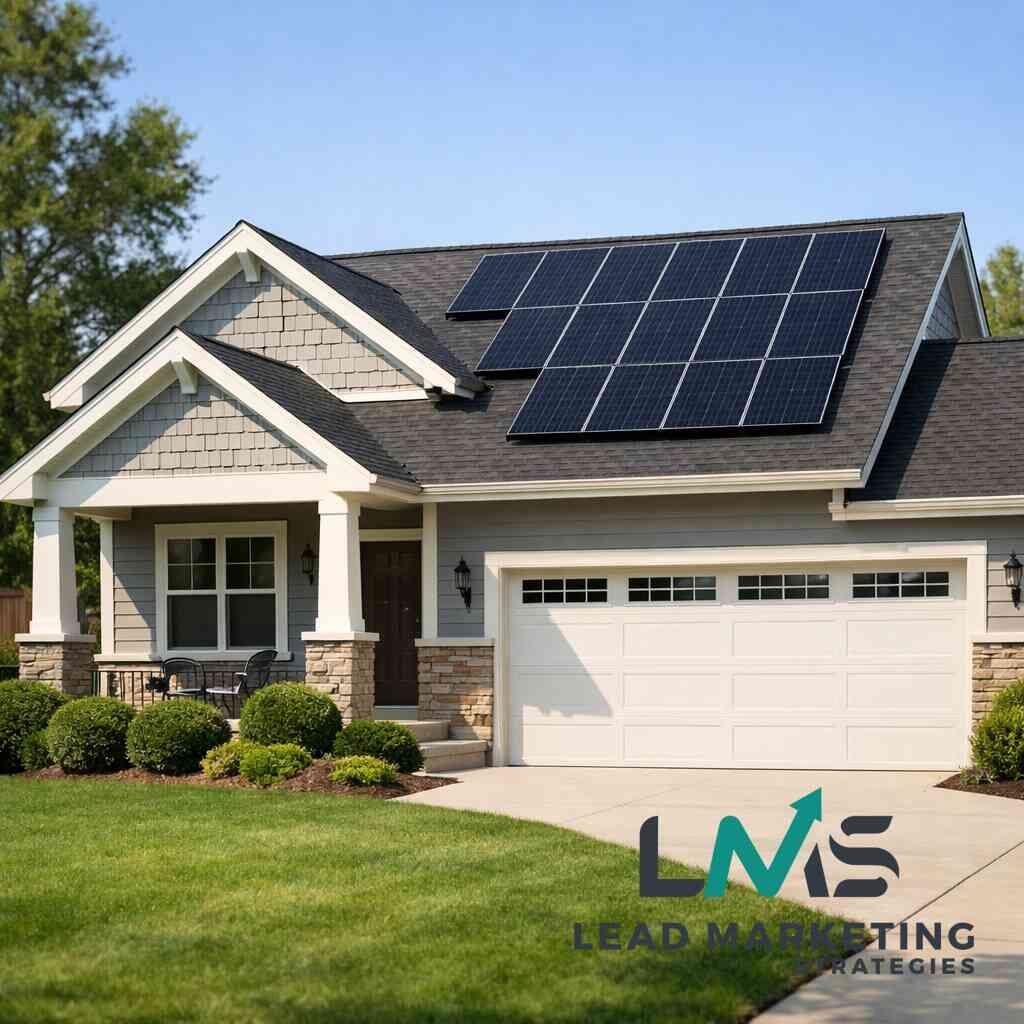
- Clear headline with location
- Short subhead that explains the offer
- One primary CTA above the fold
- Financing or incentive callout
- Trust block with reviews, certifications, or installs
- Service area line
- Secondary CTA after the main proof
That structure works because it matches how people scan. It also aligns with solar customer journey optimization, where each section removes one reason to hesitate.
The trust signals that move a visitor from curious to ready for a solar quote request form
Trust signals do the heavy lifting on a solar homepage. Testimonials, review counts, manufacturer badges, warranty details, and before-and-after project photos all help. But they must feel specific. “Happy customers” is weak. “Installed on 48 homes in Suffolk County with a 5-star review average” is stronger and more believable.
I also like to place trust signals near the quote request form, not just at the bottom of the page. That is where doubt peaks. Pair the form with a short reassurance line about response time and what happens next. If your solar quote request forms ask for too much too soon, people drop off.
In one commercial solar advertising campaign, we shortened the form from nine fields to five and moved testimonials beside it. Lead volume rose, but the real gain was better quality. People who filled it out had already seen enough proof to self-select. If you want a deeper conversion framework, our conversion rate optimization work focuses on that exact shift.
The conversion map behind solar web design for lead generation
The conversion map is simple: get the right visitor to the right page, then remove every delay between interest and action. Mobile speed, page clarity, and matching intent usually matter more than fancy motion graphics. That is why solar website conversion optimization often starts with structure, not style.
Why mobile-friendly solar website design, fast-loading pages, and clean UX usually beat flashy graphics
Most solar traffic now starts on a phone. If your mobile layout is hard to tap, slow to load, or packed with oversized animations, you lose leads before the page finishes rendering. Google also rewards pages that are easy to use, and its guidance on helpful content and page experience supports that approach. I tell clients to build for speed first and polish second.
Clean UX matters because solar is a comparison purchase. Visitors want to skim, not study. Short sections, strong headers, visible buttons, and simple navigation make the decision easier. Flashy graphics can help brand development, but only after the page proves value. If a page takes too long to load, it can hurt both solar SEO and paid performance from Google Ads for solar companies.
A quick comparison helps:
ElementBetter for conversionsRisk if overdoneLarge video heroCan build emotion and brandSlows load time on mobileHeavy animationAdds visual polishDistracts from CTA and formClean sectioned layoutImproves scanning and trustCan feel plain without strong copyShort formRaises completion rateMay reduce lead detail if too shortThe fix is not to make the site bland. It is to make every visual choice serve the solar sales funnel. If you want a more detailed review, our Web Design Services for Solar Companies work is built around speed, clarity, and lead flow, not just looks.
A second point matters here. The best solar landing pages do not try to say everything. They say enough to earn the click, then send the visitor to the next step. That is why our team often pairs a homepage rebuild with Lead Generation for Solar Companies and local solar SEO. The site becomes the hub, not the whole strategy.
If you want to see how we think about this in practice, our Top 3 Solar Web Design Mistakes Hurting Your Lead Flow piece breaks down the issues I see most often on underperforming sites.
At Solar Marketing Strategies, we build these pages around the real solar sales cycle. We have worked with companies that need residential solar marketing, commercial solar advertising, or local solar SEO in competitive markets like Long Island, Pennsylvania, and Texas. The goal is simple: less wasted traffic, more qualified calls, and a cleaner path from click to booked appointment.
Final move: start with one conversion audit
If your solar website brings visitors but not enough quotes, the fastest win is a conversion audit on the homepage, service pages, and lead form. Focus on the headline, proof blocks, financing language, and mobile speed. Then compare that against your solar PPC and solar SEO traffic so you can see where the leak starts. If you want help, book a consultation with Solar Marketing Strategies or contact us. You can also download our app to build the project from there, which makes it easier to share assets, track progress, and keep everything in one place.
Frequently Asked Questions
Question: How can Solar Marketing Strategies improve my solar website design for better solar lead generation and lower cost per lead solar?
Answer: We focus on solar website conversion optimization, not just aesthetics. That means we build a solar lead generation website that answers the three things homeowners care about fastest: what you install, where you work, and why they should trust you. Our approach to solar web design for lead generation includes clear value propositions, strong solar CTA optimization, trust signals like testimonials and reviews, and simple solar lead capture forms that make it easy for visitors to request a quote. We also review mobile-friendly solar website design, fast-loading solar websites, and solar homepage optimization because those factors often have a bigger impact on cost per lead solar than flashy visuals. When the page is built around the solar sales funnel, you get more qualified inquiries from the same traffic.
Question: What should a high-converting solar landing page include for solar PPC and Google Ads for solar companies?
Answer: A high-converting solar landing page should match the ad message, location, and intent from the first screen. For solar PPC and Google Ads for solar companies, that means the headline should mirror the keyword theme, the service area should be obvious, and the page should push one clear action like a solar quote request form. We also recommend solar financing callouts, solar testimonials and reviews, and a short explanation of what happens after someone submits the form. That structure helps with solar lead gen strategies because it reduces friction and gives visitors enough confidence to convert. Our team at Solar Marketing Strategies builds high-converting solar landing pages that support solar PPC benchmarks, improve solar marketing ROI, and make paid traffic work harder.
Question: How does the blog How to Improve Solar Website Design for More Conversions connect with solar SEO and local solar SEO?
Answer: The blog How to Improve Solar Website Design for More Conversions is closely tied to solar SEO because search performance and conversion performance depend on many of the same page elements. Strong solar search engine optimization brings the right visitors to your site, but solar website UX improvements, solar FAQ optimization, and solar schema markup help turn those visitors into leads once they arrive. For local solar SEO, we also recommend service area pages and local landing pages that clearly mention the cities and regions you serve, such as Long Island solar marketing or Commack NY marketing agency targeting. This matters because homeowners want proof that you are local and relevant. At Solar Marketing Strategies, we build pages that support both rankings and conversions so your solar SEO and solar digital marketing work together instead of separately.
Question: Can Solar Marketing Strategies help with solar company marketing beyond website design, like solar content marketing, solar social media, and solar brand development?
Answer: Yes. We are a full solar marketing agency that supports more than just web design. Our solar marketing services can include solar content marketing, solar social media, solar brand development, solar email marketing, and solar referral programs, depending on your goals. The reason this matters is simple: a website converts better when the rest of your solar digital marketing is consistent. If your solar installer advertising, Facebook ads for solar, and solar content marketing all send the same message, your brand becomes easier to trust and your solar sales funnel becomes more effective. We also help with solar energy brand strategy and renewable energy marketing so your business stands out in competitive markets. Whether you need residential solar marketing, commercial solar advertising, or nationwide solar marketing support, we build a plan that fits your pipeline and growth goals.
Question: What makes Solar Marketing Strategies different from other companies offering solar marketing tips or solar website design services?
Answer: What sets Solar Marketing Strategies apart is that we connect strategy, execution, and lead generation in one place. Many firms can give solar marketing tips, but fewer can build a system that combines solar website design services, solar SEO, solar PPC, solar panel marketing, and solar lead generation into a measurable process. We focus on what actually drives results: better page structure, stronger solar website trust signals, cleaner solar lead capture forms, and conversion-focused messaging that supports your solar marketing ROI. We also make the process easier through our mobile app, where you can create a project, book a meeting, upload assets, track progress, and manage invoices in one place. That combination of convenience and expertise helps us stand out as a best solar marketing company for contractors who want real growth, not just a prettier website.
Every article is written by one of our founders and independently reviewed by the other before it goes live.

Ken Key is the Chief Technology Officer and Co-Owner of Solar Marketing Strategies. He engineers the technical systems, SEO, and tools that help solar installers attract and convert homeowners. He and his wife Dominique run the company as a family business, bringing both creative and data-driven care to every campaign.

Dominique Key is Chief Marketing Officer and Co-Owner of Solar Marketing Strategies, a family-run agency helping solar installers connect with homeowners who are ready to go solar. She guides brand strategy, visual identity, and client experience with a warm, down-to-earth style. She co-runs the agency with her husband, Ken Key, blending personal attention with practical marketing know-how.