
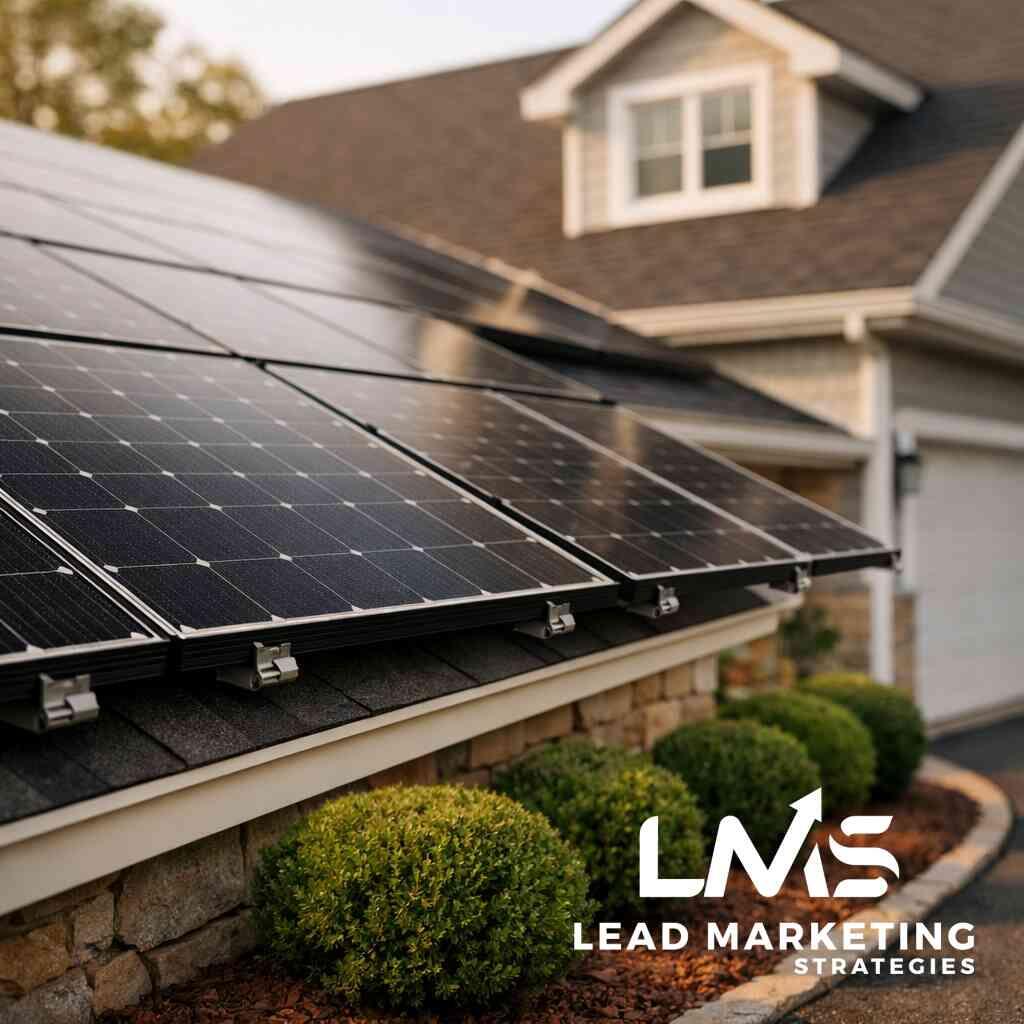
Solar content marketing earns trust when it answers real homeowner fears, proves local expertise, and makes the next step feel safe. If your solar SEO brings traffic but no quote requests, the problem is usually not reach. It is credibility.
Key Takeaways
- Trust-building content for solar companies should explain costs, incentives, financing, and payback before asking for a lead.
- Solar SEO drives clicks, but homeowner trust in solar depends on clear proof, local context, and honest comparisons.
- Generic solar website content sounds like every other installer, so it rarely supports solar lead generation.
- The best content connects solar keyword research to the buyer’s actual questions, not just high-volume terms.
- Strong solar conversion optimization uses education, testimonials, and design together, not as separate tactics.
Why most solar content gets clicks but no trust
Solar content often fails because it chases traffic instead of confidence. The page ranks, the visitor lands, and then the copy feels thin, generic, or overly promotional. That is where the lead dies. Trust-building content has to slow the reader down just enough to answer the questions they are already asking in their heads.
The hidden gap between solar SEO traffic and homeowner confidence
The gap is simple: solar search engine optimization can bring in people who are curious, but curiosity is not readiness. Homeowners want to know if the numbers work, whether their roof qualifies, how long installation takes, and whether the company will still answer the phone after the sale. Google’s own guidance on helpful, people-first content points in this direction, and its quality standards reward pages that solve the user’s real problem rather than repeat keywords. For that reason, good solar SEO should support education, not just rankings.
Here is the part most homeowners miss. A searcher typing “solar company marketing” or “residential solar marketing” is often comparing three installers at once. If your page only says you are “trusted” and “experienced,” you sound like everyone else in town. If it explains utility bills, shading, rebates, and timelines in plain English, you start to sound like the expert.
One Long Island installer we reviewed had strong traffic from local terms, including neighborhood and town searches, but weak conversions. The fix was not more ads. It was a page structure that answered financing, roof conditions, and permitting before the quote form ever appeared. Lead volume improved because the content felt useful, not pushy.
Why generic solar website content sounds like every other installer in town
Generic copy uses the same safe phrases: “save money,” “go green,” “clean energy solution,” and “top-rated team.” That language is not wrong, but it is empty. It does not show how your process works, what homeowners should expect, or why your approach is different from the next solar marketing agency in the search results.
The strongest solar website content uses specifics. It explains permit timing, inspection steps, utility approval, and what affects the cost per lead solar campaigns can tolerate. It also speaks differently to residential solar marketing and commercial solar advertising, because those buyers care about different risks.
A useful content framework looks like this:
- Answer the money question first.
- Explain the project process second.
- Show proof third.
- Offer the quote last.
That order matters because it mirrors how real buyers think. It also supports better solar marketing ROI by reducing unqualified leads.
What buyers need to believe before they ever request a quote
Buyers need to believe three things before they fill out a form: the system will save them money, the company can deliver what it promises, and the process will not become a headache. If your content does not address fear, price will always be the only thing they compare. That is where most solar lead generation efforts break down.
The solar customer education stack that answers fear before price
The best solar customer education follows a simple stack: problem, options, proof, and next step. First, explain why the homeowner is seeing high bills or slow payback. Then show the available paths: purchase, loan, lease, or PPA where applicable. After that, add project proof and a realistic timeline.
A strong education stack usually includes:
- Myth-busting content about warranties, roof work, and maintenance.
- Incentives education for federal, state, and utility programs.
- Process pages that explain survey, design, permits, install, and interconnection.
- FAQ content that handles objections before they reach sales.
- Case studies with actual system sizes, bill reductions, and service areas.
That structure works because it helps homeowners feel informed, not sold. It also supports solar contractor SEO by creating topical depth around real buyer intent. For rules around ads and claims, the FTC’s advertising guidance is worth following closely, especially when you discuss savings, rebates, or performance.
How solar comparison content and financing content remove the last objections
Comparison pages and financing pages do the final heavy lifting. They help a homeowner compare solar against rising utility rates, or compare cash, loan, and lease structures without feeling trapped. If you want better solar lead gen strategies, this content often converts better than broad promotional pages because it meets people at the decision point.
Content typeWhat it answersWhy it convertsSolar comparison content”Why solar now?”Reduces hesitation and frames valueSolar financing content”Can I afford this?”Removes the biggest price objectionSolar incentive content”What programs apply?”Adds urgency and claritySolar case studies”Will this work for someone like me?”Builds proof and social confidenceWe have seen campaigns where a single financing explainer reduced wasted sales calls because prospects arrived already understanding monthly payment ranges. That is a better outcome than chasing more clicks. It also aligns with solar marketing tips that focus on quality, not volume.
If you are building this content from scratch, start with a page map instead of random blog posts. Use one pillar page, a few detailed support pages, and one internal path to solar lead generation. That is how content starts supporting revenue instead of sitting in a blog archive.
The content engine that turns solar brand credibility into leads
A content engine works when every piece has a job. Some pages attract search traffic. Some pages build trust. Some pages push a qualified visitor toward a form, a call, or a consultation. When those jobs are connected, solar brand credibility turns into measurable lead flow.
Building a solar content strategy around local solar SEO and real search intent
Start with solar keyword research, but do not stop at volume. Look for intent. Someone searching “local solar SEO” or “solar web design” is usually closer to action than someone searching a broad industry term. Someone searching “Long Island solar marketing” or “Commack NY marketing agency” wants a local partner who understands the market, utility landscape, and the pace of the sales cycle. A practical content strategy usually includes: – Local service pages for each market you serve.
- Educational blog posts that answer high-friction questions.
- Comparison pages for financing, equipment, and installer selection.
- Proof pages with authentic testimonials and project examples.
- Conversion pages that connect content to a quote or call.

This is where a specialized team helps. Solar Marketing Strategies focuses only on solar companies, so the content model is built around solar sales cycles, local search, and lead quality instead of generic marketing advice. That matters if you want a partner who understands solar company marketing and the way content supports both SEO and paid media. If you want a deeper framework, their content marketing service and website design service are built to work together.
We also see better results when the content supports the channel mix. A blog can feed solar social media, email nurture, and retargeting at the same time. Short video clips, quote graphics, and simple explainer posts keep the brand visible while the buyer decides. That is especially useful for solar video marketing and solar email marketing, where repeated exposure improves response rates.
The best content engines do not chase every market at once. They focus on one clear buyer path, then expand. In practice, that means local solar panel marketing for homeowners, separate messaging for commercial prospects, and a consistent brand story across pages. If you need support beyond content, Solar Marketing Strategies also offers solar brand development and solar website design services that help the message feel believable from the first click to the final form fill.
If your current content is getting visits but not trust, start by fixing the pages that sit closest to money: financing, comparison, proof, and contact. Then tighten the internal links, simplify the copy, and make every page answer one real question. If you want help building that system, book a meeting or contact the team to discuss your next steps.
Frequently Asked Questions
How do I create solar content that builds trust?
Create content that answers the buyer’s biggest fears before asking for a quote. Focus on pricing, financing, incentives, timelines, roof suitability, and the installation process. Add real examples, local details, and proof such as testimonials or case studies. Avoid vague claims. Trust grows when your content sounds useful and specific.
What type of content works best for solar lead generation?
The best content for solar lead generation includes financing explainers, comparison pages, myth-busting articles, local service pages, and case studies. These pieces move people from interest to action because they answer objections. Short educational videos and email follow-ups also work well when they support the same message.
Is solar SEO enough to get qualified leads?
No. Solar SEO can bring traffic, but it does not guarantee trust or conversion. You also need strong website messaging, proof, and a clear lead path. The best results come when search visibility, content quality, and conversion optimization work together.
How long does it take for solar content marketing to work?
Some pages can start generating leads within weeks if they target strong intent and support paid traffic. Organic results from solar SEO usually take longer because search engines need time to trust the site. The fastest gains often come from fixing high-intent pages like financing, comparison, and contact pages.
Should solar companies use blog posts or service pages?
Use both. Service pages should capture high-intent searches and explain what you sell. Blog posts should educate buyers and support those service pages with internal links. A strong solar content strategy uses blog posts to build topical authority and service pages to convert.
How can a solar company improve website conversions?
Improve conversions by making the value clear above the fold, adding proof near the form, reducing clutter, and answering common objections on-page. A clean layout, strong calls to action, and trust signals such as reviews and project examples can make a big difference. Good solar web design is part of the sales process, not just the brand.
What makes Solar Marketing Strategies different?
Solar Marketing Strategies works only with solar businesses, so the team builds campaigns around solar sales cycles, local search, and qualified lead generation. That focus helps them create SEO, content, ads, and website systems that fit the industry’s buying process instead of using generic marketing templates.

The Solar Marketing Strategies Team
Our team of marketing experts specializes in helping solar businesses grow their businesses through strategic digital marketing, SEO, and customer acquisition.
View all articles

