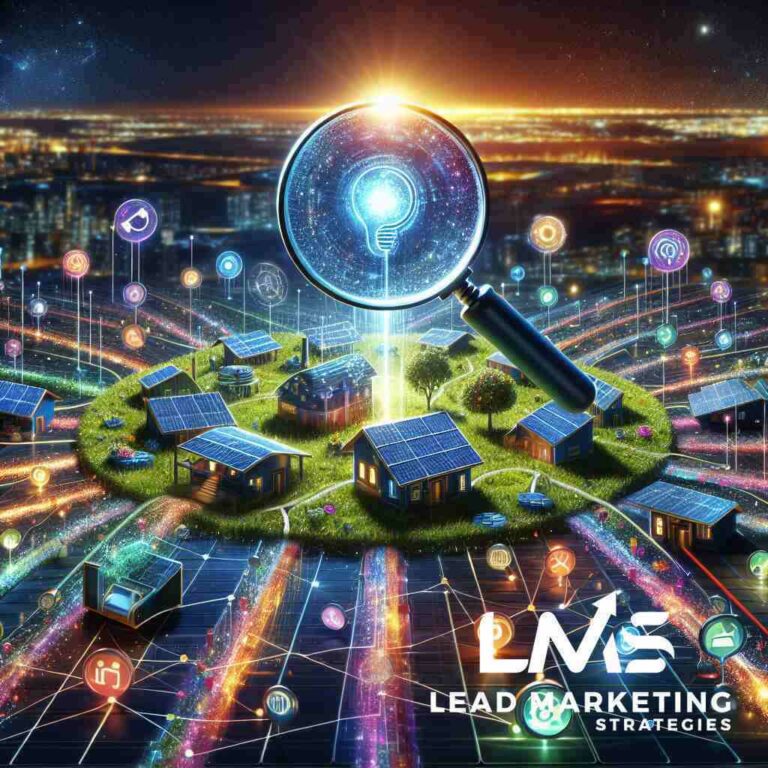

The average solar installer burns thousands of dollars a month on digital ads that never turn into a single installation. Many business owners believe that summer heat automatically drives people to buy solar panels because utility bills spike during the hotter months. While energy demand is at its peak, expecting customers to sign contracts simply because the temperature is high is a mistake. Your marketing might be attracting clicks, but if those clicks aren’t turning into signed paperwork, you are losing money. Many firms pour their entire budget into generic campaigns that fail to address the specific pain points of modern homeowners. To succeed, you must move beyond simple visibility and focus on conversion, trust, and long-term brand authority.
The Summer Solar Paradox: Why Your Current Marketing Is Burning Cash
Many solar companies fall into the trap of thinking summer marketing is easy because the demand for relief from high utility bills is obvious. However, the sheer volume of noise in the digital space means that generic advertising often gets ignored by even the most motivated homeowners. If your message does not clearly explain how solar provides immediate relief from cooling costs, you will lose the lead to a more attentive competitor. This seasonal shift requires a surgical approach to your messaging that accounts for the urgency of the moment without appearing desperate. Relying on “set it and forget it” advertising strategies during this critical window is a recipe for wasted spend and frustrated sales teams.
Identifying the seasonal lead generation trap
The primary danger during the summer months is the misconception that high search volume equates to high intent. Many homeowners search for information about solar energy simply because their latest electric bill was unexpectedly high, not because they are ready to install. If your seasonal solar lead generation efforts do not filter these casual researchers from high-intent prospects, your sales team will waste countless hours on dead-end calls. You must segment your audience by their specific stage in the buyer journey to ensure your outreach remains effective. A homeowner asking about panel efficiency needs a different conversation than one who is ready to talk about financing options. Failing to differentiate these groups leads to a bloated cost-per-lead that ruins your profitability during your busiest time of year.
Focusing on volume over quality is the quickest way to exhaust your marketing budget. We observe many installers chasing vanity metrics like clicks or impressions instead of tracking actual site visits that lead to consultations. When you stop chasing every single person who types “solar” into a search engine, you free up resources to target homeowners who have the roof space and financial profile to move forward. This shift from broad-spectrum outreach to targeted acquisition is what separates market leaders from those who barely break even. By setting clear parameters for what a qualified lead looks like, you ensure that your investment focuses on high-value potential customers.
Why high traffic does not mean high installation volume
A common frustration for solar contractors is seeing a spike in website visitors that fails to translate into a corresponding increase in completed installations. High traffic usually indicates that your messaging is catching attention, but the conversion gap reveals that your offer is missing the mark for the modern consumer. If your website lacks a clear, persuasive path to a consultation, visitors will simply leave and look for a competitor who makes the process seem simpler. You must ensure that every touchpoint on your site addresses the friction points that prevent a homeowner from choosing solar today. This includes transparent information about warranties, installation timelines, and the specific impact on their monthly energy expenses.
Homeowners are often overwhelmed by the complexity of switching to solar panel technology when they first start researching. If your site does not guide them through the process with confidence, they will pause their search until the next utility bill arrives. We see this happen constantly, where a lack of clarity on the landing page forces potential customers to retreat. By streamlining your interface and providing social proof through clear case studies, you bridge the gap between interest and action. You are not just selling equipment, but a long-term solution to the problem of rising energy costs.
The hidden cost of ignoring local solar SEO during peak demand
Many solar companies focus so heavily on paid advertising that they completely neglect their organic search foundation during the summer months. This is a critical error because local solar SEO services provide the most cost-effective leads you can acquire. When a homeowner searches for a solar installer, they want someone who understands their specific regional utility rates and state incentives. By ignoring your local presence, you allow competitors to claim the top spots on the map pack, stealing leads that should have been yours. This foundational work pays dividends by lowering your total cost per acquisition over the long term.
Investing in local SEO means more than just listing your address on your website; it requires active management of your local reviews and citation profiles. When you maintain a strong presence in local directories, you build the kind of trust that paid ads often struggle to cultivate on their own. This trust becomes the deciding factor for homeowners who are wary of predatory sales tactics in the renewable energy market. Furthermore, search engines reward companies that provide specific, location-relevant information to their users. If you are a contractor in a place like Commack, your content should speak directly to the concerns of people in that community.
Engineering High Conversion Solar Landing Pages for Summer Heat
A landing page is not just a digital flyer; it is the most important component of your sales machine. During the summer, your pages must work harder than at any other time of the year to capture the attention of busy homeowners. If your page takes more than a few seconds to load or fails to clearly state your value proposition, your prospective customer is already looking elsewhere. Every element on your page, from the hero image to the final call to action, must serve a specific purpose. You should prioritize speed, mobile responsiveness, and a clear offer that feels urgent yet professional.
Aligning solar digital marketing ROI with seasonal consumer behavior
Success in this industry depends on your ability to match your marketing efforts with the actual state of mind of your target customer. Homeowners are significantly more motivated to explore renewable energy options during months where their air conditioning bills reach uncomfortable levels. Your digital marketing ROI will improve if your landing pages address this specific pain point immediately upon loading. By framing your service as a relief mechanism for high summer utility costs, you align your goals with theirs, which creates an instant connection. This level of intentionality ensures that every dollar spent is directed toward a message that actually resonates with current needs.
It is equally important to use tracking tools that tell you exactly where your leads are coming from and how they interact with your content. Many solar companies use generic forms that do not provide enough context to the sales team, leading to wasted time. Instead, we advocate for high-conversion solar landing pages that ask the right questions to qualify the lead upfront. This way, your sales team is only focusing on individuals who are ready to make a decision. This refined approach to data tracking means you spend less time guessing and more time refining a process that is already proven to work.
Optimizing solar web design to capture residential solar sales velocity
The velocity of your residential sales is directly tied to the efficiency of your website design and the ease of navigation for the user. Many companies clutter their sites with too much information, which overwhelms the customer and results in a higher bounce rate. A clean design that highlights local rebates, clear financing options, and simple contact forms will always outperform a site that is packed with technical jargon. You need to create an environment where the path to a quote is intuitive and free of unnecessary obstacles. When you reduce the friction of starting the conversation, you naturally increase your conversion rate.
Beyond the aesthetics, your site must be engineered to handle the surge in traffic that often comes with seasonal spikes. If your site breaks or slows down when you run an ad campaign, you are essentially throwing money into a fire. We emphasize a design philosophy that prioritizes mobile performance, as most homeowners will initiate their search for a solar provider on a smartphone. By focusing on residential solar installation marketing, you ensure that your brand remains accessible and helpful at the exact moment a prospect is ready to take the next step. A professional site that loads instantly builds the immediate trust necessary to win a contract.
Using solar marketing automation to nurture leads before they cool off
The time between a lead expressing interest and an installation actually taking place can be significant, which is why nurturing is vital. If you wait too long to follow up, the homeowner may lose interest or be snatched up by a competitor who had a faster response time. By implementing solar email marketing, you ensure that every potential customer receives timely, relevant information. Automated sequences can educate the prospect about energy savings, answer common questions about the installation process, and keep your brand top-of-mind during their decision-making phase. This keeps the conversation active and prevents leads from going cold before they even get to a consultation.
Automation does not replace the human touch; it enhances it by providing your team with the data they need to have smarter conversations. When you can see which emails a lead opened or which pages they visited, your sales team can customize their outreach accordingly. This level of personalization is the key to converting leads that would otherwise be ignored. By nurturing your pipeline, you create a sustainable rhythm of sales that is not dependent on the constant influx of new leads alone. Building this infrastructure allows you to scale your business while keeping your team focused on closing rather than administrative tasks.
Tactical PPC and Social Media Strategies for Maximum Solar Brand Awareness
Paid advertising and social media are the engines that keep your brand in front of potential customers during the busy summer season. However, simply throwing money at Google or Facebook is a surefire way to bleed cash if you do not have a clear strategy. You must be precise with your targeting to ensure you are reaching homeowners who are likely to convert. This requires a deep understanding of solar energy market positioning and the ability to pivot your budget based on which channels are performing best. By staying agile, you can maintain a high volume of quality leads without overspending on platforms that do not produce results.
Refining Google Ads for solar companies to lower cost per lead
Google Ads is often the first place companies turn to when they want to scale their results quickly. However, without constant Google Ads management for solar companies, you will likely pay far more for a lead than is necessary. The key is to focus on high-intent keywords that signal a customer is ready to speak with a professional rather than just doing general research. We suggest building negative keyword lists to prevent your ads from appearing for irrelevant queries that waste your budget. By maintaining a sharp focus on the intent behind the search, you can drastically reduce your cost per lead.
Data-driven decisions are the only way to manage a successful PPC campaign in such a competitive industry. You should be constantly A/B testing your headlines, descriptions, and landing pages to see what performs best with your specific audience. Keeping an eye on your solar PPC benchmarks will help you identify when it is time to shift your tactics or increase your bids. Furthermore, when you are scaling solar PPC results in New York, you must factor in the specific state and utility incentives that make your offer more attractive. This level of detail makes your ads stand out as the most logical choice for the homeowner.
Scaling Facebook ads for solar to target summer energy bill pain points
Facebook offers a unique opportunity to build brand awareness through targeted visual content that hits on the emotional pain of high bills. Unlike search ads, which capture intent, social media ads are excellent for interrupting the scrolling habit and presenting a solution to a problem the user is already experiencing. You can use demographic and interest-based targeting to reach homeowners who are likely interested in sustainability and long-term cost reduction. By highlighting the reality of summer energy costs in your creative, you speak directly to the viewer’s current situation. This allows you to generate demand even when the customer was not initially planning to search for solar.
Consistency is key when it comes to social media engagement, so your brand presence must remain active and helpful. By sharing social media marketing for solar companies, such as highlighting real-life customer stories and explaining simple energy-saving tips, you foster community trust. These ads should point to dedicated landing pages where visitors can learn more without being hit with a hard sell immediately. When you use Facebook as a way to start a conversation rather than just asking for a sale, you lower the barrier to entry. This long-term approach to engagement builds a loyal base of followers who are much more likely to choose your company when they decide to install.
Leveraging solar video marketing to build trust in competitive markets
Video is the most powerful tool you have to explain complex technology like solar panels to a skeptical audience. In a competitive market, a well-produced video that features a real installer discussing the process can be the difference between a lead and a lost opportunity. Your solar brand awareness campaigns should prioritize high-quality visuals that demonstrate the professionalism of your team. By humanizing your brand through video, you remove much of the mystery and fear associated with roof work and long-term energy contracts. This builds an immediate sense of reliability that plain text simply cannot match.
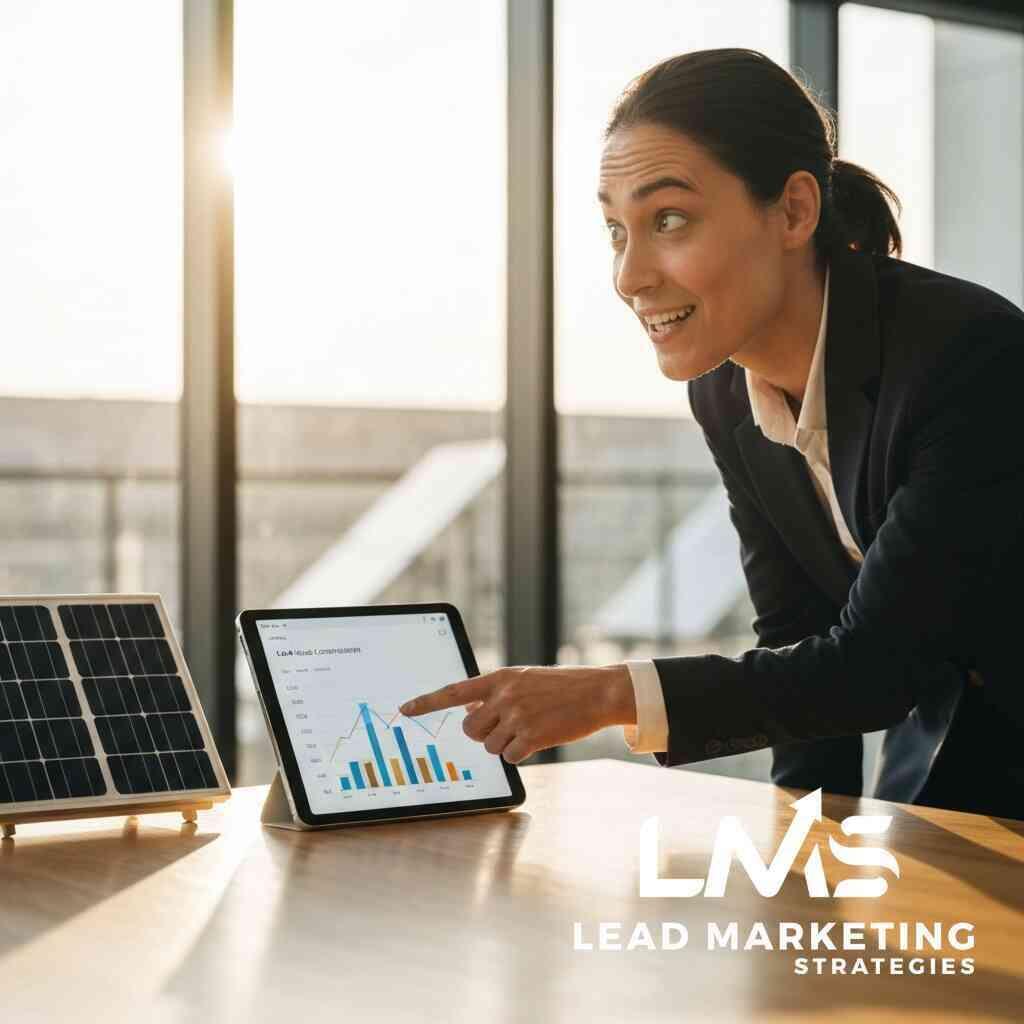
You do not need a massive production budget to succeed; you just need to be authentic and informative. Focus on answering the top five questions your sales team gets on every single call to provide real value. When you share these videos on your website and social media, you position yourself as a helpful expert rather than just another vendor. This content strategy reinforces your authority in the clean energy space and helps customers feel comfortable moving forward. Digital marketing for clean energy thrives on the ability to translate technical concepts into simple benefits for the homeowner.
Turning Summer Leads Into Long Term Solar Energy Brand Strategy
Closing a lead is only the first part of building a successful solar business. True success is found in what happens after the panels are installed and how you convert those customers into advocates for your brand. A strong long-term strategy focuses on creating a loop of referrals and consistent brand presence that makes future lead generation cheaper. By treating every customer as a potential partner, you create a cycle of growth that is far more stable than constantly chasing new, cold leads. The most successful installers in the country understand that their reputation is their most valuable asset.
Implementing solar referral program incentives for sustainable growth
Referral programs are the backbone of a high-growth solar company because they provide the lowest possible cost per lead. When a happy customer recommends your services to their neighbors, the trust barrier is virtually non-existent, making the sale significantly easier. You should make your referral process simple, clear, and rewarding for both the existing customer and the new lead. By providing tangible incentives or supporting their local community, you show your clients that you value their contribution to your success. This turns your existing customer base into a loyal, dedicated sales force that works on your behalf 24/7.
It is vital to communicate your program clearly throughout the entire installation and post-installation process. Do not wait until the very end to ask for referrals; seed the idea early by providing great service from the first contact. If you make it easy for your customers to share their positive experience, they will naturally want to tell their friends about their new energy savings. This is a critical part of search engine optimization for solar where you leverage the digital footprints of your happy clients. A strong referral culture is the hallmark of an established company that focuses on long-term stability and growth.
Applying solar contractor lead nurturing to increase customer lifetime value
Lead nurturing does not stop at the signature line; it continues throughout the entire life of the customer relationship. By using content marketing for solar companies, you can keep your brand at the center of the customer’s energy journey. This might include providing information on how to monitor their energy production or offering advice on battery storage add-ons as technology improves. When you provide ongoing support, you make yourself the go-to expert for all their future clean energy needs. This long-term engagement is what builds true customer lifetime value and keeps your business relevant for years to come.
Communication should be proactive, not reactive, which means you provide value before they even ask for it. If you offer a service plan or maintenance tips, ensure that your outreach is helpful and aligned with their needs. This level of customer care helps you stand out in an industry that is often criticized for poor post-installation support. By demonstrating that you care about their ongoing success, you secure their loyalty and ensure they never have a reason to look at your competitors. This professional approach is a core part of online advertising and ensuring your brand equity remains high.
Taking control of your growth with our mobile solar marketing platform
Managing your marketing efforts manually is no longer a viable way to scale your business. We developed our mobile app for solar companies to give you total transparency into every project you run with us. From the moment you create a project, you can monitor the status, track your progress, and stay in constant contact with our team. This allows you to focus on running your business while we handle the heavy lifting of digital strategy and lead acquisition. Having everything in one place saves you time and ensures that nothing falls through the cracks during your busiest months.
If you are looking for a local solar marketing agency, our team is ready to help you execute a plan that works. We have the data and the experience to help you navigate the unique challenges of the solar industry across all 50 states. By combining a professional web presence with targeted PPC and local SEO, we build systems that generate results year after year. Do not settle for marketing that burns your budget without providing a clear return on investment. Join the many successful companies that use our platform to stay organized and productive while we build their brand.
How much does solar marketing cost?
Solar marketing costs vary depending on the channels used, the competitiveness of your market, and your growth goals. Effective strategies often involve a mix of PPC advertising, content creation, and SEO maintenance. Instead of viewing it as a cost, focus on the cost-per-lead and the lifetime value of a signed customer. Many firms find that investing in a professional agency delivers better ROI than managing disparate, low-performing campaigns internally. The goal is to reach a point where your lead acquisition cost is sustainable and scalable.
Can I do solar SEO myself?
While you can perform some basic SEO tasks yourself, professional solar SEO requires deep technical expertise, constant monitoring of algorithm updates, and high-quality content production. A professional agency can handle complex tasks like schema markup, link building, and site speed optimization that are crucial for ranking on Google. Solar SEO is highly competitive, and trying to handle it alone while running a contracting business often leads to inconsistent results. Outsourcing allows you to focus on installations while experts ensure your site remains a top-tier lead generation tool.
What’s a good cost-per-lead for solar PPC?
A good cost-per-lead depends on your profit margin and the local market conditions. Generally, you should measure the success of your PPC campaign by the quality of the leads rather than just the lowest price per click. A higher cost-per-lead is acceptable if it results in a higher conversion rate to installation. We monitor internal benchmarks to help you identify when a campaign is working effectively. Focus on the final ROI of your ad spend rather than getting fixated on initial acquisition costs alone.
How long until I see results from solar SEO?
Solar SEO is a long-term strategy that typically takes three to six months to show significant improvements in rankings and organic traffic. Unlike paid ads, which provide instant visibility, SEO builds sustainable authority over time. Patience is necessary, but the payoff is lower long-term lead costs and a more credible digital presence. By consistently providing high-quality, location-relevant content, you establish your company as the local authority. Most contractors see compounding growth as their site gains domain authority and trustworthiness in search results.
What defines an effective solar marketing strategy?
An effective strategy must integrate brand awareness, lead capture, and a clear sales funnel. It should address the specific pain points of your local customers, such as high utility costs and regional energy incentives. You need a mix of immediate tactics like Google Ads and long-term efforts like local SEO to ensure consistent growth. Everything should be tracked with data to verify your ROI and guide future spending decisions. When your marketing aligns perfectly with your operations and sales team’s needs, you build a sustainable business.
Frequently Asked Questions
Question: Why is it important to move beyond vanity metrics when focusing on Mastering Solar Marketing Strategies for Summer Campaigns?
Answer: Many solar companies fall into the trap of focusing on clicks and impressions, which are often vanity metrics that do not reflect true solar lead generation success. To achieve a high solar digital marketing ROI, you must focus on quality over quantity. At Solar Marketing Strategies, we prioritize residential solar sales velocity and high-conversion solar landing pages that actually turn browsers into buyers. By identifying high-intent prospects and using advanced solar marketing automation, we ensure that your seasonal solar lead generation efforts are focused on homeowners who are truly ready to make a commitment, rather than just casual researchers, which is the cornerstone of our Mastering Solar Marketing Strategies for Summer Campaigns approach.
Question: How does local solar SEO help a solar company outperform competitors during the busy summer season?
Answer: During the peak of summer, high utility bills drive homeowners to search for immediate relief, making local solar SEO a critical battleground. By leveraging our expert local solar SEO strategies, we ensure your business claims the top spots on map packs and local search results. This visibility is essential because homeowners trust providers who understand their specific regional utility rates and state incentives. Solar Marketing Strategies excels at building your organic search foundation, which provides the most cost-effective leads and builds long-term trust that paid ads often fail to cultivate on their own.
Question: Can social media and video marketing really improve my solar brand awareness in a competitive market?
Answer: Absolutely. In a crowded renewable energy market, solar video marketing is one of the most effective ways to humanize your brand and answer complex consumer questions about clean energy advertising. We help you create high-quality, authentic content that builds trust. When paired with effective solar social media engagement strategies, these campaigns interrupt the scroll and present your service as a solution to the pain of high summer electric bills. Solar Marketing Strategies specializes in these brand development efforts, ensuring your company remains top-of-mind when homeowners decide to pull the trigger on their solar investment.
Question: What makes the Solar Marketing Strategies mobile platform better than managing campaigns manually?
Answer: Managing solar PPC, SEO, and content marketing manually while trying to run a contracting business is a recipe for disaster. Our mobile platform for solar lead growth provides total transparency, allowing you to track project status, manage invoices, and communicate with our team in real-time. Whether you are in Commack, NY, or operating nationwide, this all-in-one solar marketing agency solution ensures nothing falls through the cracks. It empowers you to maintain control over your digital transformation while our experts handle the heavy lifting of optimizing your solar sales funnel.
Question: How can I ensure my solar referral programs are actually working to drive sustainable growth?
Answer: A successful solar energy brand strategy includes turning every satisfied customer into a long-term advocate. At Solar Marketing Strategies, we help you implement effective solar referral program incentives that are simple, clear, and rewarding. Referral leads are the most cost-effective leads you can acquire because they come with pre-built trust. We integrate these programs into your post-installation follow-up process, ensuring that your customer lifetime value is maximized and that your growth becomes a self-sustaining cycle that is not solely dependent on constant cold traffic.
The Solar Marketing Strategies Team
Our team of marketing experts specializes in helping solar businesses grow their businesses through strategic digital marketing, SEO, and customer acquisition.
View all articles