Solar website design affects lead generation because homeowners judge your trustworthiness, clarity, and competence in seconds, then decide whether to call, click, or leave. A polished site that loads slowly, hides pricing cues, or buries the next step will leak leads even if your ads and SEO are working.
Key Takeaways
- Solar website design is a direct lead driver, not decoration. The layout, speed, mobile experience, and offer structure all shape whether a visitor becomes a form fill or a bounce.
- Trust signals matter more in solar than in many other trades. Homeowners want proof, clear financing help, local credibility, and a low-friction path to talk with a real person.
- Traffic without conversion is expensive. Strong solar SEO and solar PPC can increase visits, but solar website conversion optimization decides whether that traffic pays off.
- The best sites make the next step obvious. A clear call to action, short lead capture forms, and a clean solar sales funnel reduce hesitation.
- If your site is attracting clicks but not appointments, the problem is usually design, messaging, or follow-through—not demand.
Why a pretty solar website still leaks leads
A pretty solar website still leaks leads when it looks good but does not answer buyer questions fast enough. Homeowners want proof, local relevance, and a simple next step. If your site hides those things, your solar lead generation drops even when your solar marketing and ads are doing their job.
The hidden friction between solar website design and homeowner trust
Trust is the first conversion test. Solar is a high-ticket purchase, and people worry about roof issues, financing, long-term savings, and whether the installer will actually show up. That is why solar trust signals matter so much: reviews, local photos, certifications, financing explanations, and real project examples lower fear. I have seen a clean site lose the lead because it felt generic, while a simpler page with strong proof booked the call.
Here is the part most homeowners miss: they are not just judging your design. They are judging your process. If your page does not show how your solar company marketing works, how consultations happen, or what happens after the form submission, it creates doubt. For basic usability and mobile trust cues, Pew Research is a useful reminder that people now rely on phones for nearly every decision, including home services research.
A recent job in Long Island made this obvious. The installer had steady traffic from solar search engine optimization and Google Ads, but the site buried the financing message and put the form below three crowded sections. Once we simplified the page and clarified the offer, calls improved without adding more ad spend. That is why solar website design services matter as much as media buying.
Why slow pages, weak mobile layouts, and vague offers slash solar lead generation
Slow pages kill intent. Weak mobile layouts do the same. And vague offers leave people wondering what they get for submitting their information. A homeowner comparing solar installer advertising options will often click the first site that feels fast, clear, and local.
The fix usually starts with three basics:
- Page speed: compress images, cut heavy scripts, and remove clutter.
- Mobile layout: keep the headline, proof, and CTA visible without pinching and zooming.
- Offer clarity: say exactly what happens next, such as a savings review or custom roof assessment.
A vague button like “Learn More” is weak. A stronger one says “Get a solar quote” or “Check my savings.” That is solar call to action optimization in plain English. If you want a deeper breakdown, I often point teams to How to Improve Solar Website Design for More Conversions because the basics are usually where the leak starts.
What Commack and Long Island installers learn when traffic rises but form fills stay flat
When traffic rises but form fills stay flat, the problem is usually not reach. It is alignment. I see this with Commack and Long Island installers that rank for local solar SEO yet still struggle to turn visitors into booked appointments. The site may attract clicks for “residential solar marketing” or “commercial solar advertising,” but the page does not match the searcher’s intent. If you are on Long Island, you also know the market is sensitive to electricity costs, roof conditions, and neighborhood fit. That means the page should speak to local concerns, not just generic renewable energy marketing. If the message is too broad, the user leaves. If it feels local and specific, they stay. Site problemWhat it does to leadsBetter fixSlow load timeHigher bounce rateCompress media, reduce scriptsWeak mobile layoutFewer taps and callsPut CTA above the foldVague offerLow form completionState the value clearlyGeneric copyLower trustUse local proof and service detailIf you are comparing agencies, this is where a solar marketing agency should earn its keep: not by making the site flashy, but by making it convert. 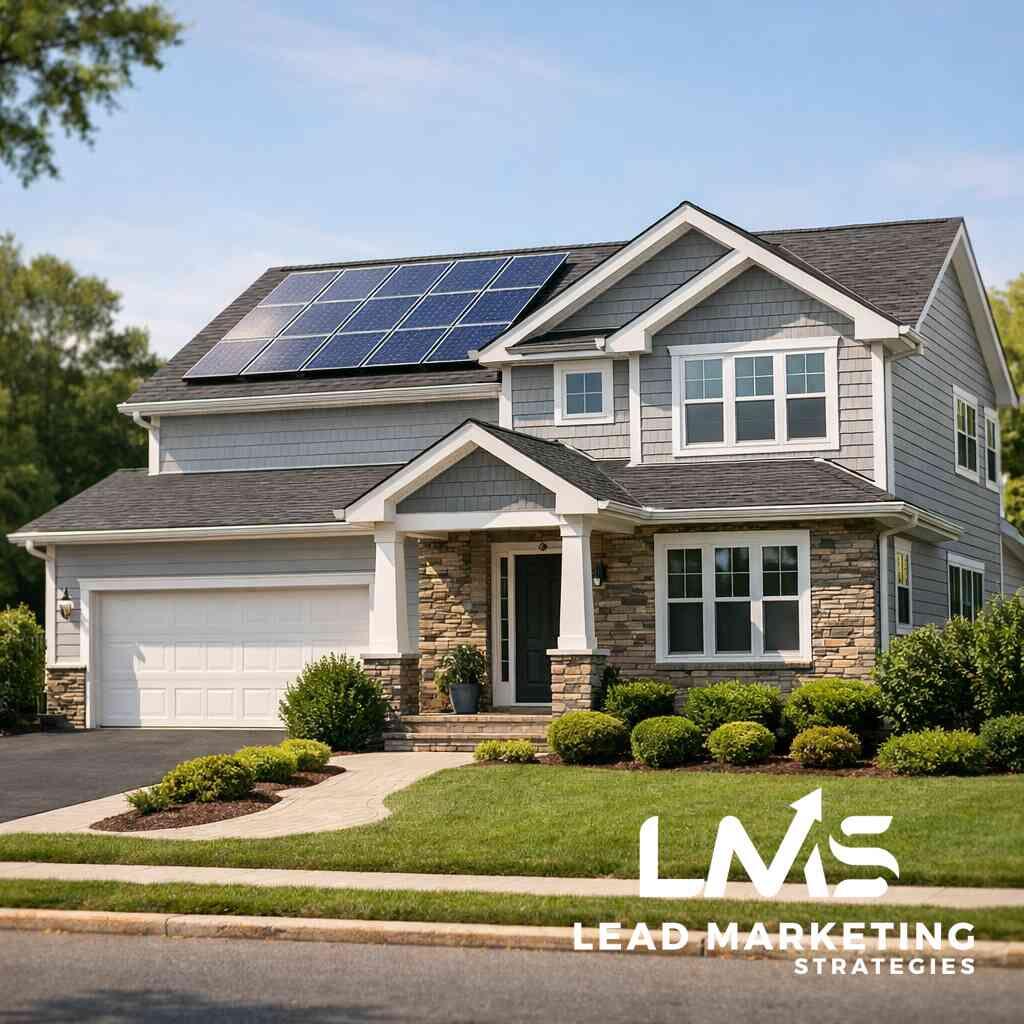
The conversion mechanics that turn clicks into booked solar appointments
Solar website conversion optimization turns clicks into booked appointments by removing doubt, shortening the path to contact, and making the offer easy to trust. The best pages combine solar trust signals, lead capture forms, and call to action optimization so the visitor knows what to do next in one glance.
How solar website conversion optimization uses trust signals, lead capture forms, and call to action optimization
Conversion is mechanical. A visitor lands, scans, decides, and acts or leaves. The site has to help each step. Good solar website conversion optimization uses proof, a clean headline, and a short form that asks only for what you need at the start. Long forms can work later in the funnel, but at the top of the funnel they usually reduce completion.
A strong page usually includes:
- A clear headline tied to savings or installation value.
- Local trust signals, such as reviews or nearby project photos.
- A short form with name, phone, email, and zip code.
- A visible CTA repeated after key sections.
- One simple path to book, call, or request a quote.
I usually tell clients that solar lead capture forms should feel easy, not demanding. If you ask for too much too soon, you lose people who were ready to talk. If you ask for too little and never explain the next step, you invite junk. The balance matters.
For teams building around a solar sales funnel, Top 5 Solar Sales Funnel Tweaks That Raise Conversion is often the missing piece. It helps connect design choices to lead quality, not just lead volume. That matters because a lower cost per lead in solar does not mean much if the leads never book.
A clean design also supports the rest of your channel mix. Solar content marketing, solar social media, and solar email marketing work better when the landing experience feels cohesive. If the ad promise and the page experience disagree, conversion drops. If they match, the click has a chance to become a call.
The best sites also support compliance. FTC advertising guidance asks marketers to avoid deceptive claims and make disclosures clear, which matters in solar where savings, tax credits, and financing can get messy fast. I keep those rules in mind when building pages because trust is easier to preserve than rebuild. For a quick reference, FTC advertising guidance is worth bookmarking.
Search still matters before the click. Solar SEO, local solar SEO, and solar keyword research bring in the right visitors, but the website has to carry them forward. A homepage can rank and still underperform if it does not match the intent behind “how to market a solar business” or “solar lead gen strategies.” The page must answer the searcher’s real question, then point them to the next action.
If you want a stronger path into Lead Generation for Solar Companies, start by tightening the site before you spend more on ads. That is often the cheaper move. It also gives solar PPC and Google Ads Management for Solar Companies a fair shot at producing booked appointments instead of wasted clicks.
One more thing I see often in residential solar marketing: the homepage tries to speak to everyone. It talks to homeowners, commercial property managers, and utility-scale solar prospects all at once. That blurs the message. A sharper page for each audience usually converts better than one crowded page trying to do everything.
If your site needs a full rebuild, Web Design Services for Solar Companies is where the work starts. If you need more qualified appointments after the redesign, How to Build a Solar Marketing Plan That Converts in 2026 is the kind of strategic follow-through that keeps the funnel moving.
You do not need a fancier website. You need a clearer one. If you want help tightening the path from click to consultation, call +18335323100 or download the Solar Marketing Strategies app and we can review what is blocking your lead flow.
Frequently Asked Questions
Question: Why does solar website design affect lead generation so much for solar companies?
Answer: Solar website design affects lead generation because homeowners make fast trust decisions the moment they land on your site. If the page feels slow, confusing, generic, or hard to use on mobile, visitors leave before they ever submit a form or call. In solar marketing, that matters even more because the purchase is high-ticket and people want proof, financing clarity, and a simple next step. Strong solar web design improves the entire customer journey by making your value proposition obvious, your solar trust signals visible, and your solar call to action optimization clear. At Solar Marketing Strategies, we build solar website design services around conversion, not just appearance, so your site supports solar lead generation, solar SEO, and solar PPC instead of leaking the traffic you already paid for.
Question: What are the most important solar website conversion optimization elements for better solar lead generation?
Answer: The biggest conversion drivers are speed, mobile usability, trust, and a short path to contact. A strong solar landing page design should load quickly, keep the headline and CTA visible above the fold, and explain what happens after someone fills out the form. Solar lead capture forms should ask for only the essentials at first, such as name, phone, email, and zip code, so the process feels easy instead of overwhelming. You also need local proof, reviews, financing explanations, and project photos to strengthen solar trust signals. Solar Marketing Strategies uses solar customer journey mapping to align design, messaging, and lead capture with what homeowners actually need to feel confident. That approach improves solar website conversion optimization, lowers cost per lead in solar, and helps your solar sales funnel turn clicks into booked appointments.
Question: How can solar SEO and solar PPC work better when the website design is optimized?
Answer: Solar SEO and solar PPC can drive a lot of traffic, but the website has to convert that traffic into leads. If your solar search engine optimization brings in the right visitors and your Google Ads for solar companies or Facebook ads for solar create clicks, your site still needs to match the intent behind those searches. For example, someone searching local solar SEO or solar installer advertising wants a fast answer, a local feel, and a clear reason to trust you. A well-built page supports solar marketing ROI by improving conversion rates without increasing ad spend. Solar Marketing Strategies connects solar keyword research, solar content marketing, and solar landing page design so your message matches the searcher’s intent. That makes your campaigns more efficient and helps you get more value from nationwide solar marketing, residential solar marketing, or commercial solar advertising.
Question: What does Solar Marketing Strategies do differently when building solar web design and solar marketing strategy for installers?
Answer: Solar Marketing Strategies treats your website as the center of your solar digital marketing, not just a digital brochure. We design for lead flow, brand trust, and measurable performance across solar SEO, solar PPC, solar social media, and solar email marketing. That means we focus on solar brand development, strong calls to action, fast mobile experiences, and clear messaging that supports how to market a solar business in a competitive market. We also understand that different audiences need different messaging, whether you need residential solar marketing, commercial solar advertising, or solar contractor SEO. Our process is built to improve solar marketing ROI by tightening the funnel, improving solar lead gen strategies, and making the site easier for homeowners to act on. As a solar marketing agency, we help companies turn website traffic into consultations, and consultations into real solar panel installations.
Question: Can a better solar website design lower cost per lead solar and improve appointment quality?
Answer: Yes, absolutely. A better solar website design can lower cost per lead in solar because it increases the percentage of visitors who become qualified leads. When your page communicates value clearly, uses strong solar call to action optimization, and presents trustworthy next steps, fewer visitors bounce and more complete the form or call. It also improves lead quality because people who submit after seeing clear financing details, local proof, and a defined solar sales funnel are usually more serious buyers. Solar Marketing Strategies builds solar website design services to support both volume and quality, which is critical for solar marketing case studies where lead count alone is not enough. When your site works well with solar SEO, solar PPC, and solar referral programs, you create a stronger conversion system that supports long-term solar marketing trends and more predictable growth.
Every article is written by one of our founders and independently reviewed by the other before it goes live.

Ken Key is the Chief Technology Officer and Co-Owner of Solar Marketing Strategies. He engineers the technical systems, SEO, and tools that help solar installers attract and convert homeowners. He and his wife Dominique run the company as a family business, bringing both creative and data-driven care to every campaign.

Dominique Key is Chief Marketing Officer and Co-Owner of Solar Marketing Strategies, a family-run agency helping solar installers connect with homeowners who are ready to go solar. She guides brand strategy, visual identity, and client experience with a warm, down-to-earth style. She co-runs the agency with her husband, Ken Key, blending personal attention with practical marketing know-how.