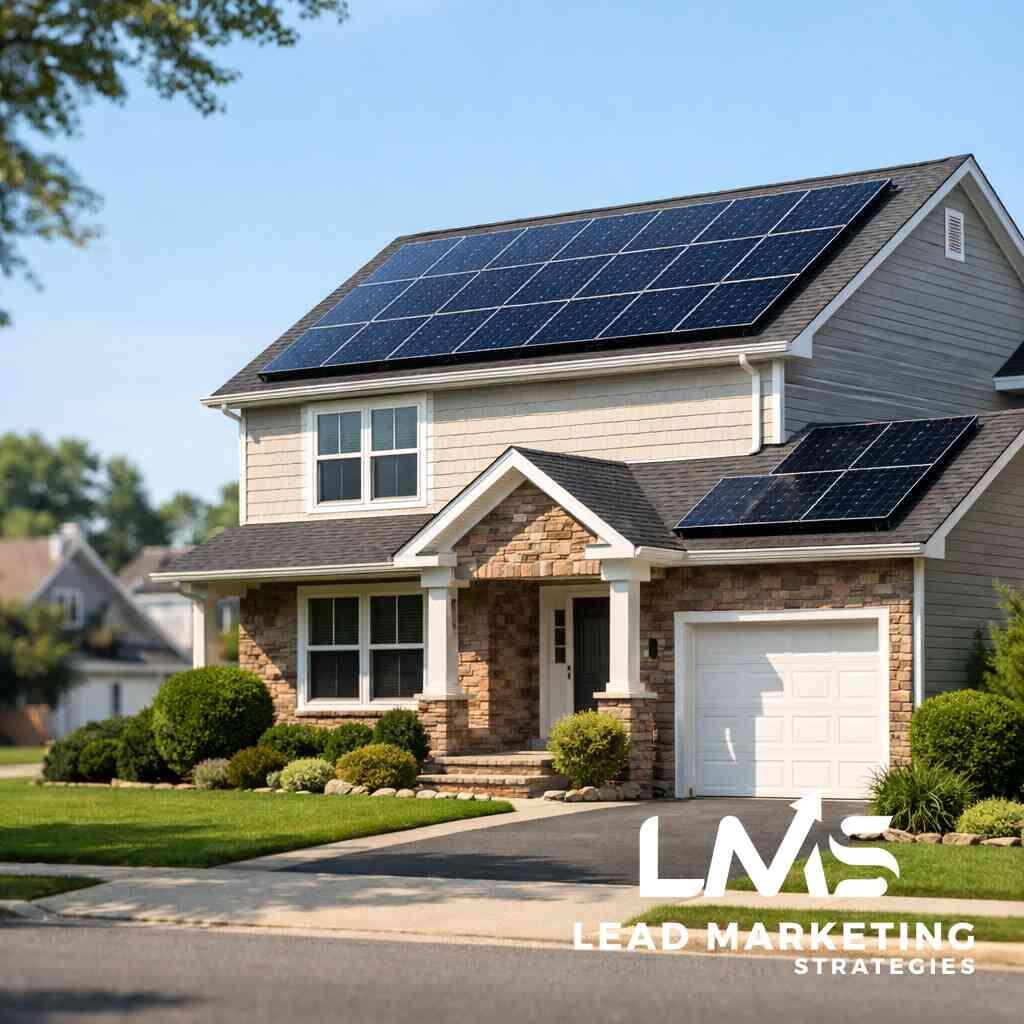
The solar landing pages that convert best are the ones that make the offer clear, remove doubt quickly, and let visitors take the next step without friction. If your page looks polished but still leaks leads, the fix is usually in the hero message, trust signals, form design, proof, speed, message match, and the conversion path.
Key Takeaways
- The best solar landing page optimization starts with one clear promise, one proof point, and one action.
- Solar trust signals for websites work best near the top of the page, before the visitor has to scroll.
- Shorter solar quote request forms and smart booking pages usually outperform long forms for residential lead capture.
- Strong solar social proof should match the buyer’s market, roof type, and project size.
- Fast, mobile-first pages protect solar marketing ROI because slow pages waste paid traffic from solar PPC and Facebook ads.
1) The Hero Section That Stops the Scroll Before It Costs You a Lead
The hero section should tell a homeowner exactly what you do, why they should care, and what to do next in under five seconds. The best solar hero section optimization uses one headline, one support line, and one button. If the message sounds generic, the visitor leaves, especially on mobile.
Why most solar landing page headlines sound like every other solar company marketing pitch
Most solar headlines fail because they lead with “save money” or “clean energy” and say nothing specific. That is a problem in solar company marketing because the homeowner has already seen ten similar claims. You need a sharper, compelling solar value proposition tied to a real pain point, like bill uncertainty, roof suitability, or financing confusion.
One client in Long Island had a page that opened with “Go solar today.” It looked fine, but conversions stayed weak. We rewrote it around a clearer promise: lower monthly power costs with a fast estimate and no-pressure review. The call volume improved because the page finally sounded like a real conversation.
How to build a compelling solar value proposition with one clear promise, one proof point, and one next move
Use this simple formula:
- Promise: what outcome the visitor gets.
- Proof point: what makes that promise believable.
- Next move: what they should do now.
A strong hero might mention solar lead generation, financing help, or a local install timeline, then back it up with a trust marker like review volume or local expertise. If you want support with page structure, Web Design Services for Solar Companies can help connect design and conversion instead of treating them as separate efforts.
2) The Offer Stack That Makes Homeowners Feel Safe Saying Yes
The offer stack should reduce fear before it asks for commitment. In solar landing page optimization, that means showing financing options, savings context, and trust cues in a clean order. If the homeowner feels unsure about price or process, no amount of ad spend will save the page.
How solar financing offer messaging and solar financing calculator placement change the yes rate
A financing message works best when it is plain and concrete. Say whether the homeowner can compare loan, lease, or cash options, and place a simple calculator near the top if the page is built for solar lead generation landing pages. The calculator should answer one thing fast: “What might this cost me each month?”
ElementBest placementWhy it helpsMonthly financing rangeAbove the foldReduces price shockSolar financing calculatorNear hero or mid-pageConverts curiosity into intentSavings claimNear calculatorMakes the math feel realCTA buttonRepeated 2-3 timesKeeps action obvious
If you work in a market like Commack or anywhere on Long Island, where electricity costs are often top of mind, this kind of message is especially effective. For a deeper pricing frame, our solar marketing cost page helps teams see how offer clarity affects the cost per lead solar campaigns produce.
Which trust signals for solar websites belong above the fold and which ones should wait
Put the strongest trust signals above the fold:
- Google review count and average rating
- Financing partners or licenses
- Local service area
- One sentence about process transparency
- A short guarantee or no-pressure statement
Wait on the deeper proof until lower on the page. License details, longer testimonials, and technical explanations can come later. Here is the part most homeowners miss: too many badges can feel noisy. A few strong signals beat a wall of logos.
3) The Form Design That Cuts Friction Without Killing Intent
Form design is where a lot of solar websites quietly lose money. In solar conversion rate optimization, the goal is not to collect every detail on the first visit. It is to keep the visitor moving. Short, well-placed forms and booking options usually outperform long quote requests.
Why solar quote request forms lose more conversions than bad ads and how to fix the fields that hurt
Long forms fail because they ask for too much, too soon. Every extra field lowers completion, especially on mobile. A better solar form optimization plan removes anything you do not need before the first contact and keeps the form to a few fields:
- Name
- Phone or email
- ZIP code
- Monthly bill range
- Optional notes
That structure works because it protects intent. It also supports better solar installer lead capture by filtering out low-quality traffic without scaring off serious homeowners. If your paid traffic is coming from Google Ads for solar companies, this matters even more.
When solar consultation booking pages outperform long forms for residential solar marketing and local solar lead capture
Booking pages work well when the buyer already wants a conversation. That often happens in residential solar marketing and local campaigns where the visitor has a specific property question. A short calendar page can outperform a long form because it feels like a simple action, not a sales gate.
We have seen that in campaigns for homeowners who already compared rates and just want clarity. For teams focused on Lead Generation for Solar Companies, that means one page can handle both discovery and scheduling. If your sales team wants fewer dead-end leads, bookable consults often win.
4) The Proof Engine That Turns Skeptical Clicks Into Warm Prospects
Proof is what turns curiosity into trust. In solar marketing case studies and testimonials, the goal is not to sound polished. It is to sound specific. A real result with a real context beats a vague quote every time.
How solar testimonials for solar companies and solar case studies for solar marketing should be framed without sounding scripted
Good testimonials mention the problem, the process, and the result. Bad testimonials say only “great service.” A strong case study should include roof type, home size, system size, or business type when possible. That is why solar testimonials for solar companies work best when they sound like a neighbor, not an ad. If you have a strong success story, link it to case studies instead of burying it in a footer. One installer in a humid coastal market saw better form fills after we replaced polished stock phrasing with a simple homeowner quote about how the estimate was explained in plain English. That small change mattered. ### Why solar social proof works better when it matches the buyer by market, roof type, and project size 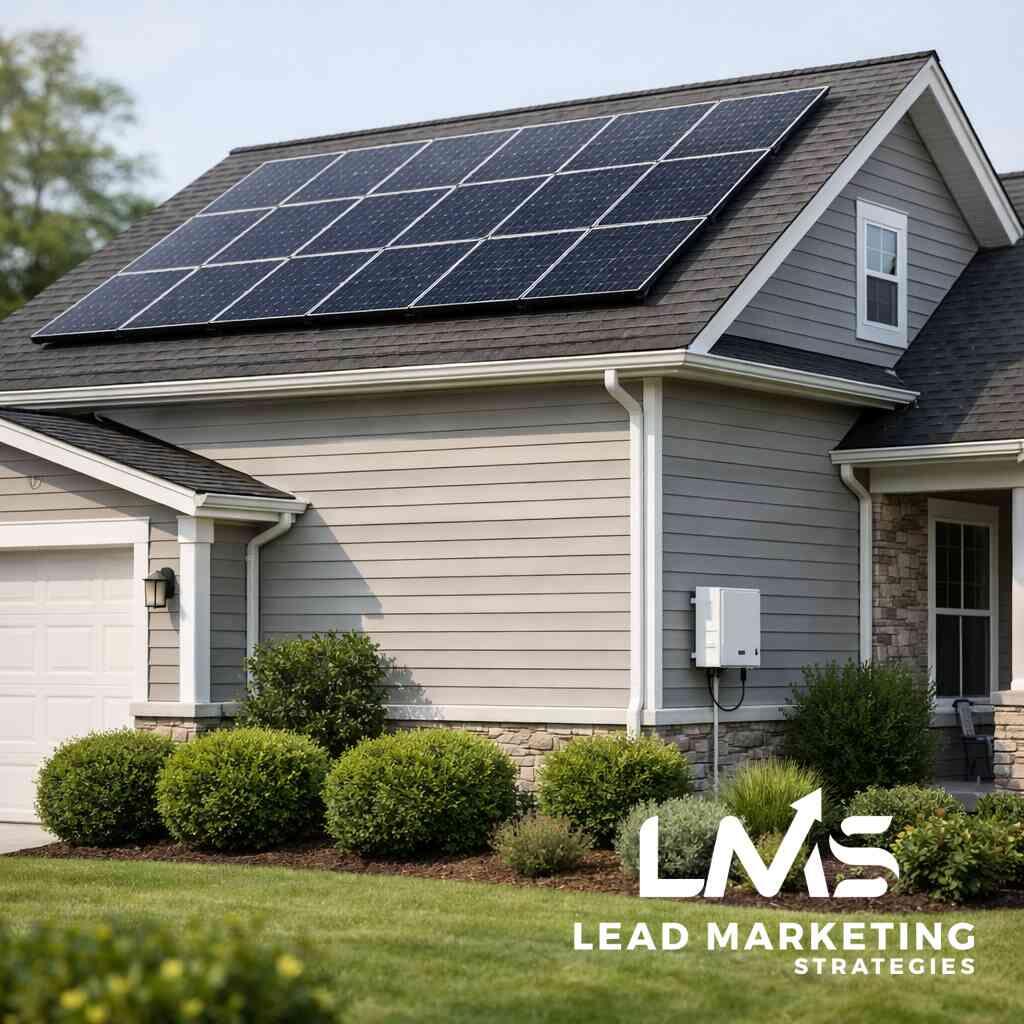
People trust people like them. A homeowner with a shingle roof in a suburb wants different proof than a business owner looking at commercial solar advertising. Match your proof by:
- Home vs. commercial
- Roof type
- System size
- Financing path
- Local market
That is also where solar brand development supports conversion. When the proof matches the buyer’s situation, the page feels built for them, not for everyone.
5) The Mobile Page Speed Trap That Quietly Burns Solar PPC Budgets
Speed is a conversion factor, not a technical vanity metric. A slow page burns paid traffic, especially on phones. For fast-loading solar landing pages, the goal is to keep the first screen light, readable, and usable before the visitor gets impatient.
How fast-loading solar landing pages and mobile-friendly solar page design protect solar marketing ROI
A mobile page should load cleanly, keep the CTA visible, and avoid heavy sliders or giant videos at the top. That protects solar marketing ROI because more paid clicks become real opportunities. Google’s own guidance on page experience and mobile usability supports this, and the FTC’s advertising guidance also reminds marketers to keep claims clear and honest.
For local firms using solar digital marketing, this is especially important because the same page often serves search, social, and direct traffic. If the phone experience breaks, everything breaks.
What solar PPC and Facebook ads for solar reveal about bounce rate when the page loads too slowly on phone
Paid traffic is less forgiving. With Facebook ads for solar and search ads alike, slow load times often show up as higher bounce rates and weaker form completion. Our agency’s internal benchmarks on solar campaigns have repeatedly shown that faster pages produce stronger engagement and better lead quality than visually heavier pages.
If you want to reduce waste, connect ad traffic to a page built for speed and clarity, not a general homepage. A dedicated landing page tied to solar search engine optimization and paid traffic can improve both quality and consistency.
6) The Message Match Formula That Keeps Ads, SEO, and Landing Pages Aligned
Message match is simple: the ad, keyword, and landing page should promise the same thing. If they do not, visitors feel misled and leave. This is one of the biggest problems in solar installer advertising and one of the easiest to fix.
How solar keyword research should shape solar SEO, solar search engine optimization, and local solar SEO landing pages
Good solar keyword research tells you what the visitor actually wants. A person searching “solar quote near me” is not looking for a branding story. A person searching “battery backup for home” wants a different page than someone searching for utility-scale systems. That is why local solar SEO pages should mirror the exact intent behind the query.
The best teams build landing pages around search themes, then connect them to SEO Services for Solar Companies and local service pages. That approach keeps the user path clean and improves relevance.
Why solar installer advertising fails when Google Ads for solar companies and solar content marketing promise different outcomes
If your ad says “get a free solar savings estimate” but the page talks about broad sustainability goals, you create friction. Google Ads for solar companies perform better when the page repeats the same offer, same audience, and same next step. That same rule applies to solar content marketing: the article, ad, and landing page should support one message.
For teams that need help with this alignment, Content Marketing for Solar Companies can be built to support both rankings and conversions. The message has to stay tight, or the click will not convert.
7) The Conversion Map That Turns One Visit Into a Solar Sales Funnel
A landing page should do more than capture a lead. It should move the visitor into a simple, guided solar sales funnel. The page converts better when the CTA, form, and follow-up path work together as one system.
How solar CTA button copy, solar form optimization, and solar appointment scheduling for solar companies work as one path
Use CTA copy that says what happens next: “Get my estimate,” “Check my roof,” or “Book a consult.” Then keep the form short and make scheduling easy. That combination supports solar appointment scheduling for solar companies because it lowers hesitation and keeps momentum.
A practical conversion path looks like this:
- Clear CTA.
- Short form or calendar.
- Fast follow-up by text or call.
- Email confirmation with next steps.
- Sales handoff with context.
If your team also uses Solar Marketing Strategies Guide to Email Campaigns That Convert, the follow-up stays consistent after the click.
What a solar website conversion strategy should do next for residential solar marketing, commercial solar advertising, and nationwide solar marketing
A strong solar website conversion strategy should match the audience. Residential buyers need reassurance and simplicity. Commercial buyers need ROI logic and process confidence. Nationwide brands need scalable structure, clear location targeting, and strong service pages that support solar lead gen strategies across markets.
If you want a specialized team that focuses only on solar, Solar Marketing Strategies is worth a look because they build around solar sales cycles, local search, and lead quality rather than generic marketing templates. Their experience with solar lead generation, SEO, ads, and web design makes them a practical option for companies that want fewer wasted clicks and more install-ready conversations. If you want help refining your page, call +18335323100 or download the Solar Marketing Strategies app and book a consultation through the support tab.
Frequently Asked Questions
Question: How can Solar Marketing Strategies improve a high-converting solar landing page with better solar hero section optimization, solar trust signals for solar websites, and a compelling solar value proposition?
Answer: Solar Marketing Strategies builds solar landing pages around one clear promise, one believable proof point, and one obvious next step, which is exactly what high-converting solar landing pages need. We focus on solar hero section optimization first because the top of the page has to stop the scroll quickly on mobile and immediately show visitors why they should trust your company. That usually means a sharp headline, a short support line, a strong solar CTA button copy, and visible solar trust signals for solar websites such as reviews, licenses, service area, and no-pressure messaging. We also make sure the page reflects a compelling solar value proposition tied to the buyer’s real concern, whether that is bill savings, financing, roof suitability, or local install confidence. This approach supports solar marketing ROI by reducing friction before the visitor ever reaches the form. For companies that want stronger solar website design services, we build the page so every section supports solar lead generation, solar company marketing, and the solar sales funnel without distracting the visitor.
Question: What changes do you recommend for solar quote request forms and solar consultation booking pages to improve solar conversion rate optimization and local solar lead capture?
Answer: The biggest mistake we see in solar quote request forms is asking for too much too soon. Solar Marketing Strategies usually recommends a shorter solar form optimization approach with only the essential fields: name, contact info, ZIP code, monthly bill range, and optional notes. That structure improves solar conversion rate optimization because it keeps the process simple, especially for mobile users. In many cases, we also recommend solar consultation booking pages because they often outperform long forms for residential solar marketing and local solar lead capture. When a homeowner is ready for a conversation, a calendar-based page feels easier and more natural than a long quote form. We connect those booking paths to solar appointment scheduling for solar companies so the visitor can move from interest to action without extra friction. If needed, we also align the page with solar financing offer messaging and a solar financing calculator so the buyer can quickly see what the monthly commitment might look like. That combination helps reduce hesitation and supports stronger solar installer lead capture.
Question: How do solar testimonials for solar companies and solar case studies for solar marketing help build solar social proof on a solar panel installation landing page?
Answer: Solar testimonials for solar companies work best when they sound specific, local, and realistic. At Solar Marketing Strategies, we encourage clients to avoid generic praise and instead use proof that includes the homeowner’s concern, the process, and the result. That might mean mentioning roof type, system size, financing path, or the local market so the visitor can see themselves in the story. Solar case studies for solar marketing are even stronger when they show a real problem solved, such as unclear pricing, slow follow-up, or confusion about the installation process. This kind of solar social proof is especially effective on a solar panel installation landing page because it turns curiosity into confidence. We often place this proof near the middle of the page and then tie it back into solar brand development so the messaging feels consistent across the website, ads, and sales funnel. When proof matches the buyer’s situation, whether for residential solar marketing or commercial solar advertising, conversion rates usually improve because the page feels made for them, not for everyone.
Question: What makes your solar SEO and solar PPC approach different when building landing pages for Google Ads for solar companies and Facebook ads for solar?
Answer: The difference is message match and intent alignment. Solar Marketing Strategies uses solar keyword research to make sure the landing page, ad copy, and offer all say the same thing. If someone clicks a Google Ads for solar companies campaign looking for a free estimate, the landing page should deliver that exact promise right away instead of shifting to a broad branding message. The same applies to Facebook ads for solar, where the visitor may be colder and more likely to bounce if the page is slow or unclear. We build pages that support both solar SEO and solar search engine optimization by matching the page structure to the search intent behind the keyword. For local solar SEO, that may mean location-focused proof and service-area clarity. For solar PPC, it may mean a sharper offer, faster page load, and more visible solar CTA button copy. This alignment improves solar marketing ROI and helps reduce cost per lead solar campaigns by turning more clicks into qualified appointments rather than wasted traffic.
Question: Can Solar Marketing Strategies help with fast-loading solar landing pages, mobile-friendly solar page design, and solar website conversion strategy for residential solar marketing and commercial solar advertising?
Answer: Yes. Fast-loading solar landing pages and mobile-friendly solar page design are core parts of a strong solar website conversion strategy. We know that slow pages burn paid traffic, especially on mobile, so we keep the first screen light, readable, and action-focused. That means fewer heavy animations, fewer distractions, and a clearer solar lead generation landing page structure. For residential solar marketing, we focus on reassurance, simplicity, and easy next steps. For commercial solar advertising, we emphasize ROI logic, credibility, and process confidence. We also build the page so it supports solar digital marketing across channels, including solar social media, solar content marketing, and solar PPC. If a company wants nationwide solar marketing, we can create a flexible system that works across markets while still supporting local solar SEO and location-specific intent. As a solar marketing agency that understands the full buyer path, we design pages that do more than look good; they help convert traffic into real leads, booked appointments, and install-ready conversations.
The Solar Marketing Strategies Team
Our team of marketing experts specializes in helping solar businesses grow their businesses through strategic digital marketing, SEO, and customer acquisition.
View all articles

