
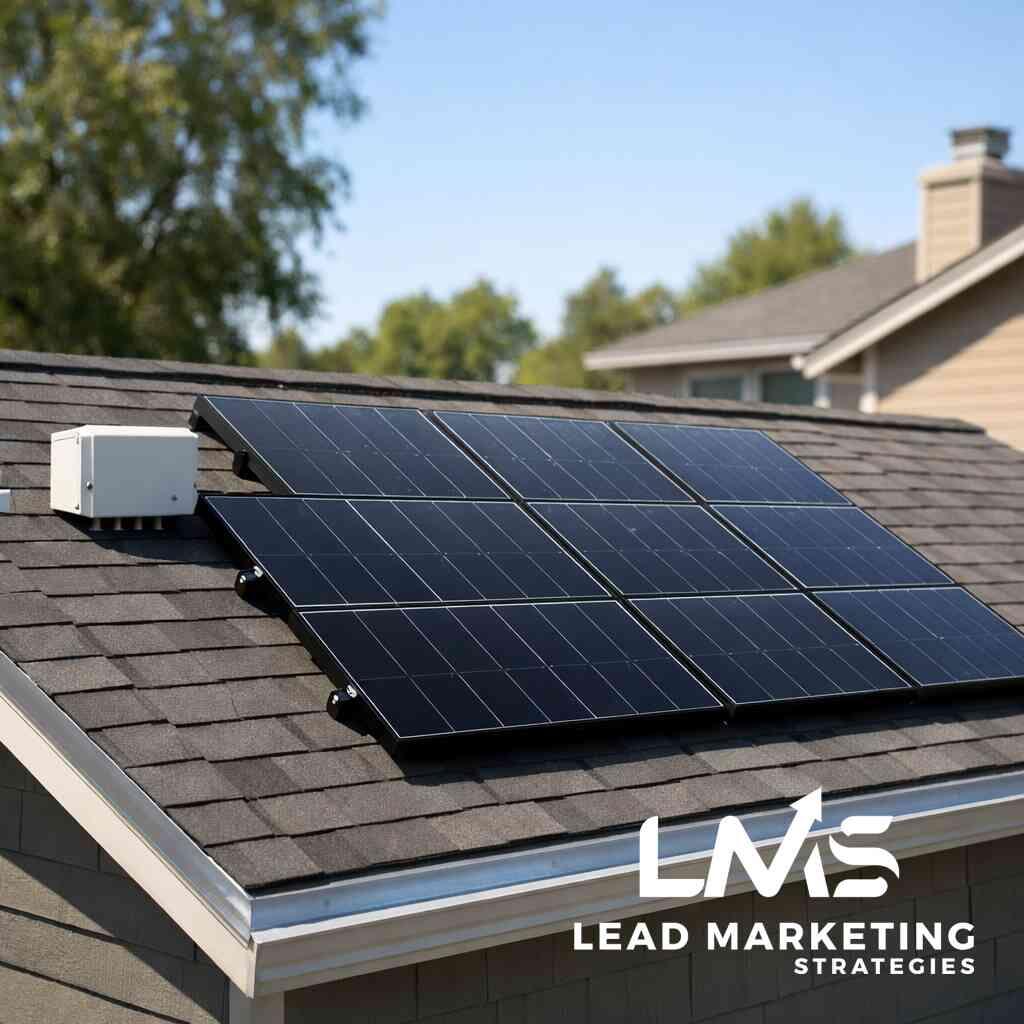
Most solar PPC campaigns waste money because they buy clicks, not booked appointments. The fix is tighter keyword control, better landing pages, and lead qualification that matches how homeowners actually buy solar.
If you are reading this after watching ad spend climb while the phone stays quiet, take a breath. That problem is common, and it is fixable.
Key Takeaways
- Solar PPC waste usually comes from weak targeting, broad search terms, and poor tracking, not from Google Ads itself.
- High-intent solar keywords only work when they match the right homeowner, the right ZIP code, and a landing page built to convert.
- Negative keyword management and solar landing page optimization usually improve solar marketing ROI faster than simply raising bids.
- A good solar campaign audit should check ad copy, call tracking, form tracking, geo-targeting, and lead qualification together.
- The best results often come from pairing solar PPC with solar SEO and conversion-focused web design.
Why your solar PPC budget disappears before the phone ever rings
The hidden leak between high-intent solar keywords and real booked appointments
Solar PPC waste usually happens in the gap between search intent and sales follow-up, much like labor-market and consumer behavior data tracked by the U.S. Bureau of Labor Statistics. You may pay for clicks on valuable terms like solar panel installation, solar quote request campaigns, or Google Ads for solar companies, but if the searcher is not ready, your cost per lead solar goes up and your appointment rate drops.
Here is the part most owners miss: not every “high-intent” click is a homeowner. Some are students, job seekers, equipment shoppers, or people comparing financing. A strong campaign should treat solar lead gen strategies like a funnel, not a lottery. In Commack and across Long Island, we have seen campaigns look active on paper while the booked-install number barely moved.
A simple way to think about it:
- Click: someone showed interest
- Lead: someone filled out a form or called
- Qualified lead: someone owns the home, has usable roof space, and fits your service area
- Booked appointment: someone is ready for a real conversation
If your ads are drawing the first two but not the last two, your solar marketing ROI will stay flat.
Why Google Ads for solar companies can look busy while your solar marketing ROI stays flat
Google Ads can produce a lot of activity without producing profit. That happens when the account is optimized for volume instead of quality. You may see more impressions, more clicks, and even cheaper traffic, but your solar sales funnel still leaks because the traffic is too broad or the tracking is too loose.
We see three common causes in solar installer advertising:
ProblemWhat it looks likeWhat it does to ROIBroad keywords”solar,” “panels,” “renewable energy”Attracts researchers and non-buyersWeak trackingNo call tracking, bad form attributionHides which ads create appointmentsPoor qualificationEvery lead gets treated the sameSales time gets wasted on low-fit homeownersA campaign can look “busy” and still underperform. The fix starts with clean attribution, then moves to better keyword filters and better landing pages. One client in a coastal market had plenty of leads, but half were renters or condo owners. Once we tightened the geo-targeting and qualification questions, booked calls rose without increasing spend.
What most solar advertisers miss when they chase clicks instead of qualified homeowners
How solar search intent, audience segmentation, and geo-targeting decide who sees your ads
Solar search intent should guide every bid decision. A homeowner searching “best solar companies near me” is far closer to buying than someone searching “how solar panels work.” The first is a commercial query. The second is research. Both matter in solar content marketing, but they should not be treated the same inside PPC.
Good solar audience segmentation starts with service area, property type, and buying stage, while broader internet use patterns highlighted by Pew Research can help inform how homeowners discover and compare services. For example, residential solar marketing in Long Island should not use the same ad groups as commercial solar advertising in Texas. The message, financing, and qualification flow are different. If you serve nationwide solar marketing, geo-targeting must also reflect local utility rates, roof ownership rates, and incentive rules.
Use tighter location rules such as:
- Target only the ZIP codes you actually sell in.
- Exclude service gaps, PO boxes, and low-fit areas.
- Split residential and commercial campaigns.
- Adjust ad copy for local utility pain points.
- Match landing pages to the market, not just the keyword.
If you want a stronger search foundation, pairing PPC with local solar SEO helps you rank for local solar SEO terms while ads do the immediate work. That mix usually improves efficiency faster than PPC alone.
Why negative keyword management and solar landing page optimization matter more than bigger bids
Bigger bids do not fix bad traffic. They only buy more of it. The fastest way to improve solar ad spend efficiency is usually to cut wasted searches and improve the page that receives the click.
Negative keyword management should block terms like:
- jobs
- salary
- DIY
- free panels
- wholesale
- repair manuals
- used equipment
- school projects
Then solar landing page optimization should do the real selling. The page needs one clear offer, one strong headline, one form, and one call to action. If your page tries to explain every solar topic at once, people leave.
A strong solar PPC landing page usually includes:
- a local headline
- a short proof statement
- two or three trust markers
- a simple quote request form
- click-to-call on mobile
- financing or savings language that stays compliant
FTC solar advertising guidelines also matter here. Claims about savings, tax credits, and performance should be accurate and clear. A clean page converts better because it feels safe, not because it sounds louder. If you are comparing ad strategy with remarketing, solar social media marketing can help retarget homeowners who clicked but did not convert.
The fix that turns wasted spend into booked installs and steadier solar lead generation
The solar campaign audit that exposes weak ad copy, bad tracking, and broken solar lead qualification
A real solar campaign audit should tell you exactly where money leaks. Start with the ad itself, then the landing page, then tracking, then sales follow-up. That order matters because many accounts blame the wrong part of the funnel.
Use this audit checklist:
- Review search terms weekly.
- Pause ad groups with non-homeowner traffic.
- Test ad copy with location and benefit language.
- Check call tracking and form tracking.
- Verify lead sources inside your CRM.
- Score leads by homeownership, ZIP code, and project fit.
- Measure booked appointments, not just leads.
We use a HubSpot-style pillar-and-cluster model adapted for solar taxonomies, and the same thinking helps PPC. A campaign should connect keyword, ad, page, and follow-up in one clean path. If your lead qualification is weak, your sales team spends time on dead ends. If your tracking is weak, your reports lie. Both problems are expensive.
For proof that the channel matters, look at SEIA’s solar data alongside state policy shifts and local utility rates. In markets like California, Florida, and Texas, demand changes quickly because rules and economics change quickly. Your ads should reflect that reality. If you want help diagnosing the full stack, a specialized solar marketing agency can audit the account with solar-specific benchmarks instead of generic PPC assumptions.
When to pair solar PPC with local solar SEO, solar remarketing campaigns, and solar web design for better conversion rate optimization
Solar PPC works best when it is not alone. The highest-performing accounts usually pair paid search with local solar SEO, remarketing, and a conversion-ready site. That gives you more touchpoints and better trust before the homeowner ever books. Use this mix when:
- your clicks are strong but your booked calls are weak
- your cost per lead solar is rising
- your sales team says leads are “not ready”
- your landing pages look dated on mobile
- your market is competitive, like Long Island or Phoenix
A good solar web design setup supports fast loading, short forms, proof points, and clear navigation. Then solar remarketing campaigns can bring back visitors who were interested but not ready. If you also run Facebook ads for solar companies, you can reinforce the same offer across channels and keep your brand top of mind.
Here is the honest takeaway: solar PPC optimization is rarely about one magic trick. It is about matching intent, message, market, and follow-up. Solar Marketing Strategies focuses only on solar company marketing, so the team builds around solar search intent, local solar SEO, and booked installs instead of generic lead volume. If you want a cleaner path from click to appointment, review our services or contact us to request a campaign audit.
You do not have to fix everything at once. Start by cleaning the keywords, then the page, then the tracking, and then the lead rules. If you want a second set of eyes, call +1 833-532-3100 or download the Lead Marketing Strategies app and build your next campaign from there.
Frequently Asked Questions
What is a good cost-per-lead for solar PPC?
A good cost per lead solar depends on your market, offer, and lead quality, but the real number to watch is cost per booked appointment. A cheap lead that never answers the phone is not cheap. In many accounts, a higher CPL is acceptable if the leads are homeowner-owned, local, and ready for a quote. Track lead quality, not just lead count.
Why do solar PPC campaigns get clicks but no appointments?
That usually means the campaign is attracting the wrong search intent, sending traffic to a weak landing page, or failing to qualify leads fast enough. Broad keywords, poor geo-targeting, and thin forms are common causes. The ad may be doing its job, but the funnel breaks after the click. Fix the match between keyword, message, and follow-up.
How do I improve solar lead generation without increasing ad spend?
Tighten your keyword list, add strong negative keywords, improve the landing page, and score leads before sales follow-up. Many solar lead gen strategies fail because they chase volume instead of fit. You can often improve booked installs by removing bad traffic and making the form shorter and clearer.
Should solar companies use Google Ads or Facebook ads?
Google Ads for solar companies usually captures higher intent because people are already searching. Facebook ads for solar companies work better for education, retargeting, and audience warming. The best mix often uses search for demand capture and social ads for follow-up. If you need one channel to start with, search is usually the faster path to qualified homeowners.
How long does it take for solar SEO to help PPC performance?
Solar SEO can support PPC fairly quickly when it improves trust, local visibility, and landing page relevance. In many cases, the effect shows up within a few months as stronger quality scores, better conversion rates, and lower wasted clicks. The real value comes from pairing paid and organic search so each channel supports the other.
What should a solar campaign audit include?
A proper solar campaign audit should review search terms, ad copy, geo-targeting, negative keywords, call tracking, form tracking, landing pages, and lead qualification. It should also compare leads to booked appointments and installs. If an audit only counts clicks or impressions, it misses the real business outcome.
The Solar Marketing Strategies Team
Our team of marketing experts specializes in helping solar businesses grow their businesses through strategic digital marketing, SEO, and customer acquisition.
View all articles